
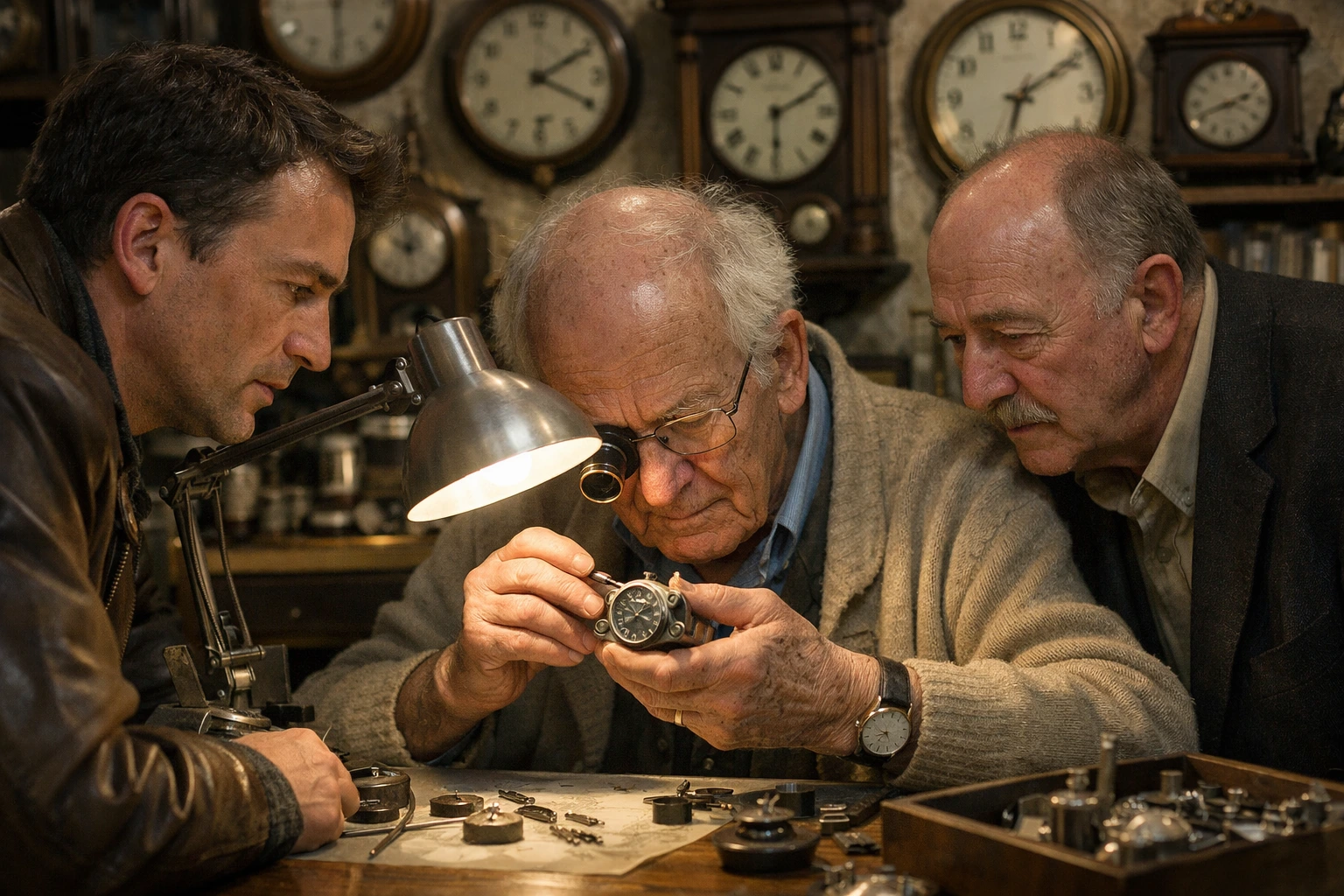
The specialist’s shop was narrower than Daniel expected, with old clocks ticking from every wall and a workbench lit by a single bright lamp. The horologist, a man in his late sixties with steady hands and magnifying loupes lined up like surgical tools, barely spoke for the first five minutes. He examined the dial, removed the strap, checked the reference and serial between the lugs, and opened the case with such calm precision that even Frank stopped fidgeting. Then he leaned back and let out a slow breath that seemed to change the temperature in the room.
It was genuine. More than genuine, it was important.
Not mint, not untouched, and certainly not perfect. But it was a rare manual-wind Rolex Daytona from the early 1970s, a model with the kind of collector demand Daniel had only heard about in passing. The replacement strap hurt nothing. The scratches were expected. The dial, movement, and case appeared original. Even in its worn condition, the watch could be worth well into six figures if authenticated fully and sold through the right auction house. Daniel actually laughed when he heard that, not because it was funny, but because his brain rejected it on impact. Six figures did not belong in the glove compartments.
What followed was less glamorous and more complicated. The rental company consulted an attorney. Notices were sent. The former leasing business was contacted. Archive records were pulled from storage. The estate reference was traced to a deceased businessman whose assets had been scattered years earlier. Family members were located, but none could prove ownership of the watch, and none even knew it existed. Weeks dragged into months. The watch sat in secure storage while experts verified every part of it. Daniel returned to ordinary life, except ordinary life now had one impossible object hanging over it like a second moon.