
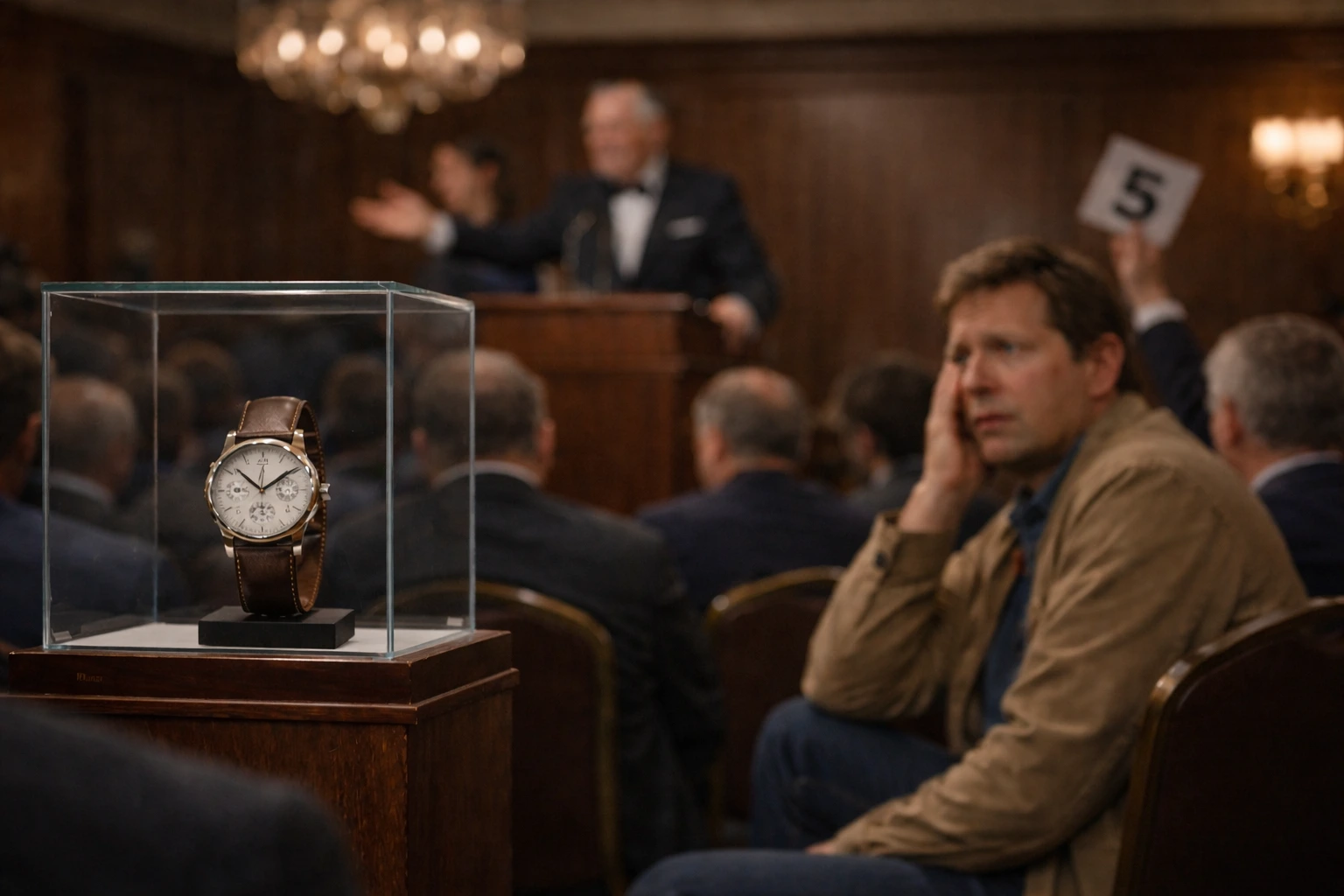
By the fourth month, Daniel had almost trained himself not to think about it. Then Frank called and asked him to come in. The attorney had finished the review. The company had done what it could: contacted prior businesses, traced the estate, notified possible heirs, and waited through the formal claim period. Nothing solid had emerged. The watch had never been listed as company inventory when the sedan entered the fleet, and no one had come forward with documentation strong enough to establish ownership. The rental agency, perhaps surprisingly, did not try to bury the matter in legal fog. Frank told Daniel that because he had reported the item immediately, cooperated throughout the process, and never tried to conceal the find, the company wanted to handle the sale transparently and share the proceeds with him.
Daniel stared at him for several seconds before asking the only sensible question: “You’re serious?”
They consigned the watch to a respected auction house that specialized in vintage timepieces. The catalog photos made the scratched old object from the rest stop look almost regal. Bidding opened cautiously, then accelerated quickly. Collectors liked the model, the dial configuration, and the story did not hurt either. When the hammer finally fell, the price landed at $312,000. After commission, legal costs, and the agreed split, Daniel’s share came to a little over $146,000.
That kind of money does not make headlines in billionaire circles. But for Daniel, who had spent the year juggling repairs, late invoices, and the constant arithmetic of almost enough, it felt unreal. He paid off debt first. Then he replaced his dead car with one he actually owned. Then he put a down payment on a small townhouse with a narrow kitchen and a fig tree in the back garden. He kept waiting to wake up broke again. But the numbers stayed where they were.