
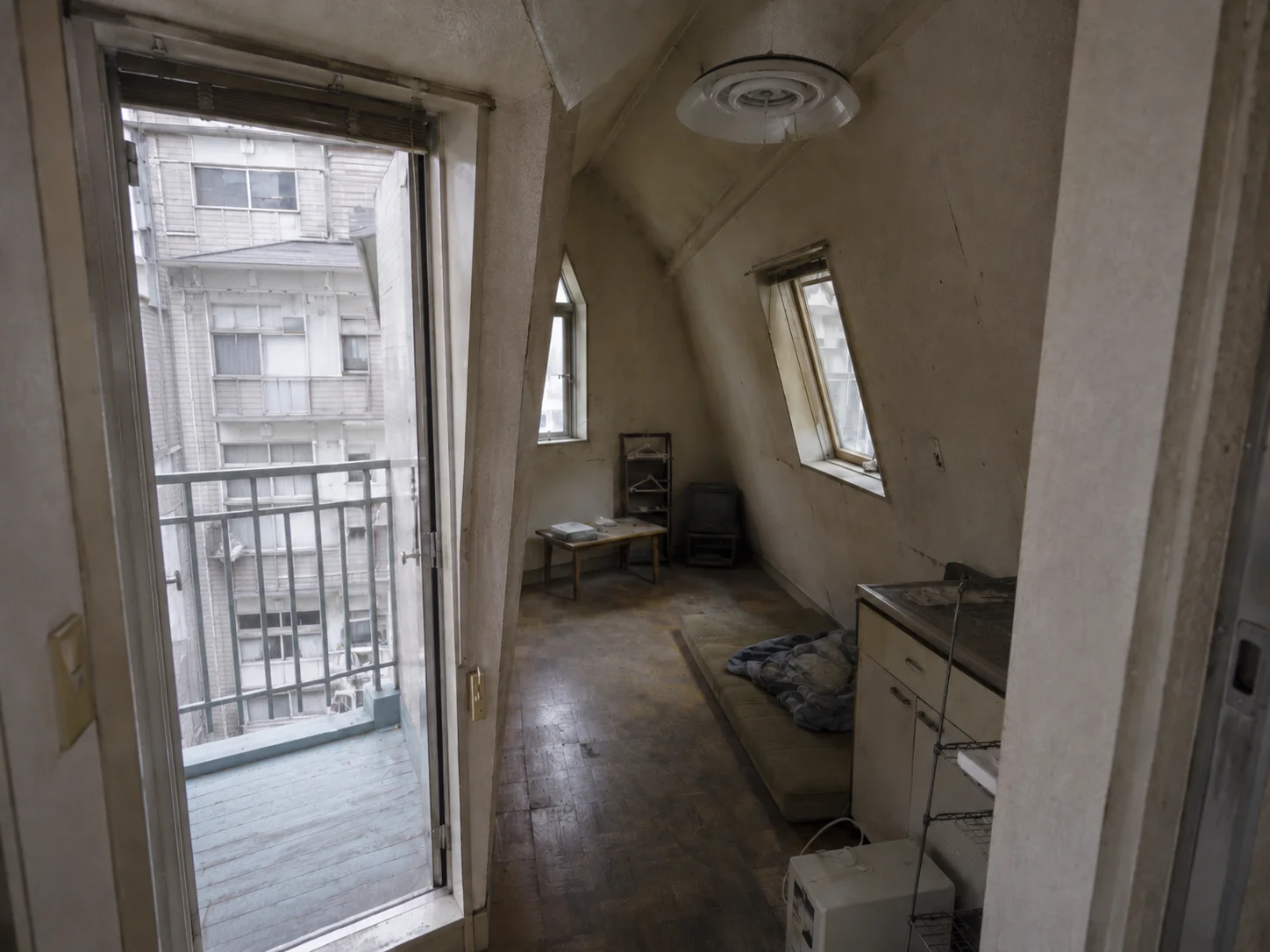
There is one more space in the building that Maya often thinks about, even though it is not part of her own apartment. Higher up, on the fifth and final floor, there is another unit. It has a walking balcony, which sounds almost luxurious compared with the rest of the building. But the unit itself is left in terrible condition, showing what can happen when a tiny apartment is no longer carefully managed.
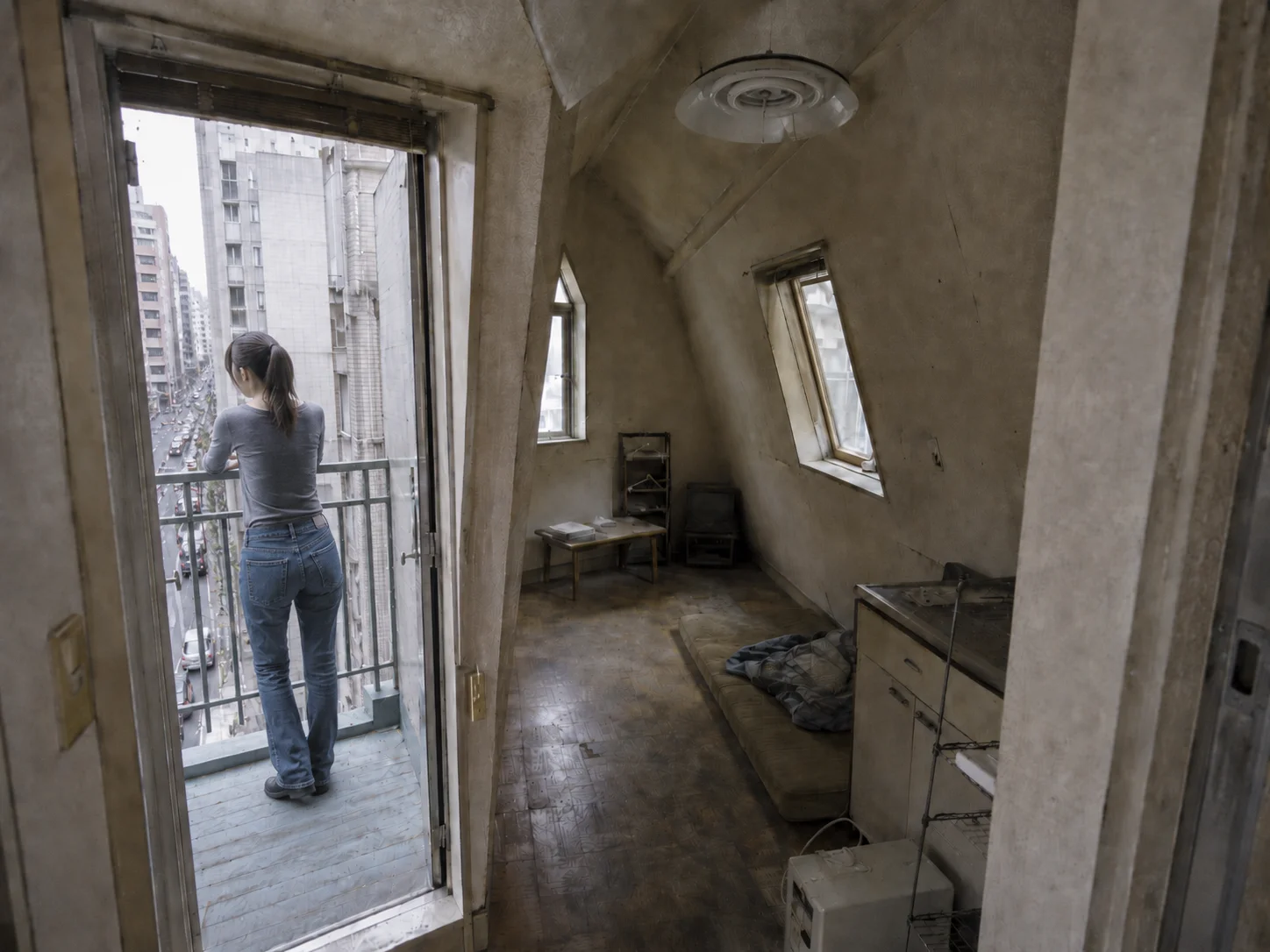
That room makes Maya see her own space differently. A tiny apartment can feel clever when it is clean, bright, and organized. But if it becomes messy or neglected, there is nowhere for the disorder to hide. In a larger home, clutter can spread slowly. In a room this small, it takes over almost immediately. The abandoned upper unit feels like a warning about how quickly compact living can become unbearable without constant care.
So Maya’s home remains a strange little lesson in limits. It has a yellow triangular exterior, a tiny entrance, a kitchen corner, a green shower door, a small bath, fake brick walls, a 2.5-meter main room, street noise, and a private toilet that sits outside the apartment itself. It is not a place she imagines living forever. But for a young international student in Tokyo, it gives her something unforgettable: a home that shows exactly how little space a person can live in, and how much determination it takes to make that space feel like hers.