
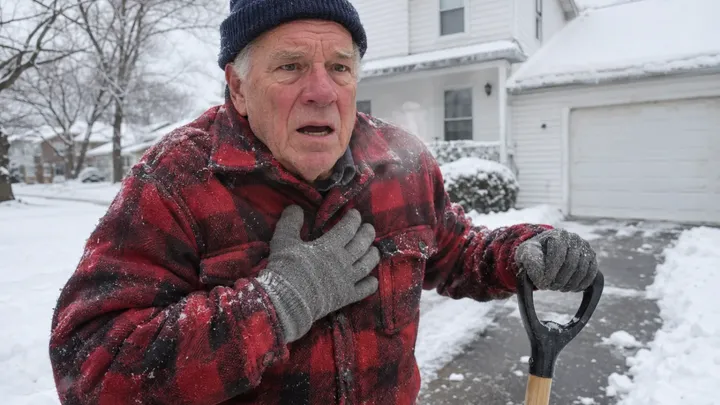
Why shoveling strains the heart
It starts with the cold. When you step out into freezing air, your body works to hold on to its heat. The American Heart Association explains that cold air makes blood vessels tighten throughout the body, which raises blood pressure, and it can also narrow the arteries that supply the heart itself. So your heart has to push harder, through narrower vessels, before you have even picked up the shovel.
Then comes the work. Shoveling is mostly arm work, and arm work is more demanding on the heart than walking or other leg work. Many people also hold their breath without noticing while they lift a heavy load, which can send heart rate and blood pressure up sharply. Heavy, wet snow makes all of this harder, because every shovelful weighs more. In one study the American Heart Association often mentions, people's heart rates climbed above 85 percent of their maximum after only two minutes of shoveling, the upper limit commonly used in exercise testing. The least fit people had the highest heart rates.
Who is most at risk?
Older adults. In the 2011 US study, people over 55 were more than four times as likely as younger people to have heart symptoms while shoveling.
People with heart disease, or who have had a heart attack or a stroke, and people with risk factors such as high blood pressure, high cholesterol, diabetes, smoking or a lot of extra weight.
People who don't exercise much, for whom the first snow can be the hardest workout of the year.
That doesn't mean you can never shovel again. It means doing it differently. On the last page: how to clear snow more safely, and the warning signs that mean you stop right away and call emergency.