
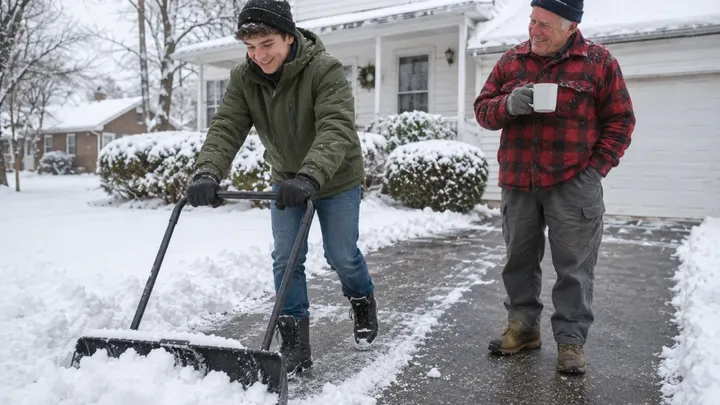
How to shovel more safely
If you have a heart condition or any health problem, don't exercise regularly, or are middle-aged or older, the American Heart Association suggests talking to your doctor before the first snowfall. Then, when the snow comes:
Warm up first with a short walk or some stretches. Use a small shovel and push the snow rather than lift it; if you must lift, take small loads and bend your knees. Go out more often while the snow is still light. Take frequent breaks and notice how you feel. Don't shovel right after a big meal, and skip alcohol before and right after.
Better still, get help. A neighbor's teenager is often happy to earn some pocket money, or you can hire a snow-removal service. A snow blower takes much of the lifting out of the job, but it has its own danger: never clear a jam with your hands, not even with gloves on. Switch it off, wait until every moving part has stopped, and use the clearing tool or a stick.
Finally, know the warning signs of a heart attack. Stop and call emergency services right away if you, or someone out shoveling, has discomfort or pressure in the center of the chest that lasts more than a few minutes or goes away and comes back; pain or discomfort in one or both arms, the back, neck, jaw, or stomach; shortness of breath; or a cold sweat, nausea, or lightheadedness. Women are somewhat more likely to have shortness of breath, nausea, and back or jaw pain. Don't wait to see if it passes, and don't drive yourself to the hospital.
If you take medication or have a health condition, check with your doctor before you shovel snow this winter.