
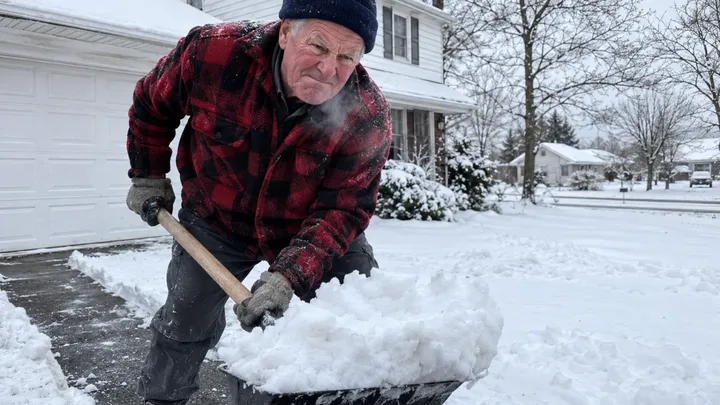
The chore everyone does after the first snow
It happens every year. The first real snow comes down, the street goes quiet, and the next morning, up and down the block, people head out with a shovel to clear the driveway and the sidewalk. For most of us, it's just one more winter job, like scraping the windshield. Grab the shovel, get it done, get to work.
But emergency doctors see a different side of that first snow.
A US study published in the American Journal of Emergency Medicine in 2011 looked at emergency room records from 1990 to 2006. The researchers estimated that about 11,500 people a year were treated in US emergency departments for injuries and medical emergencies linked to snow shoveling. Most had sore backs, strains, or injuries from slips and falls. Only about 7 percent had heart-related problems, but those were the most serious cases: they made up about half of the hospital admissions, and every death the study counted was heart-related. That worked out to nearly 100 deaths a year.
A large Canadian study, published in the medical journal CMAJ in 2017, came at it from another angle. Researchers compared more than 30 years of winter weather in Quebec with heart attack records. In men, a heavy snowfall of about 8 inches (20 cm) was linked to higher odds of being admitted to the hospital with a heart attack the next day, and higher odds of dying from one. In women, they found no clear link. The study couldn't see who had been shoveling, but snow shoveling is seen as one likely reason.
So why can a simple chore be so hard on the heart? On the next page: what happens inside your body, and who is most at risk.