
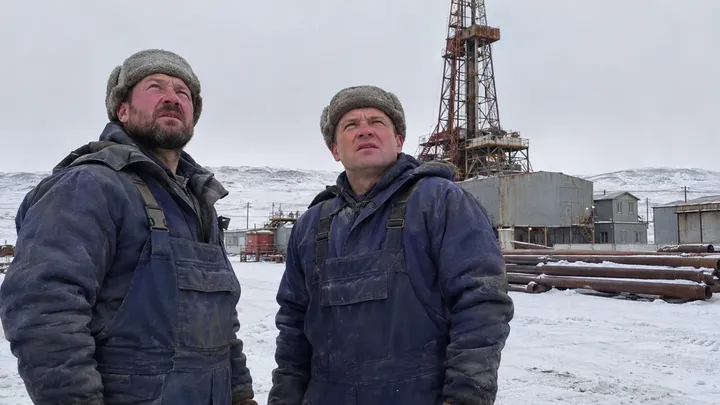
A race to the bottom
In the 1960s, the race between the United States and the Soviet Union was not only about going up into space. Scientists on both sides also wanted to go down. Much of what geologists believed about the deep crust came from studying earthquake waves, not from rock anyone had actually held. They wanted to drill down and see for themselves.
The Americans tried first. Their plan, called Project Mohole, was to drill through the thin ocean floor toward the Earth's mantle, the layer below the crust. Costs kept climbing, and in 1966 Congress cut the funding. On May 24, 1970, the Soviet Union started its own attempt, on dry land: on the Kola Peninsula, in the far northwest of Russia, above the Arctic Circle and close to the border with Norway.
The target was 15 kilometers, more than 9 miles straight down. The hole itself was surprisingly narrow: about 23 centimeters, or 9 inches, across, narrower than a dinner plate. The scientists had a clear picture of what they expected to find on the way down. Much of that picture turned out to be wrong. On the next page: the world record they broke, and the first surprises from deep below the tundra.