
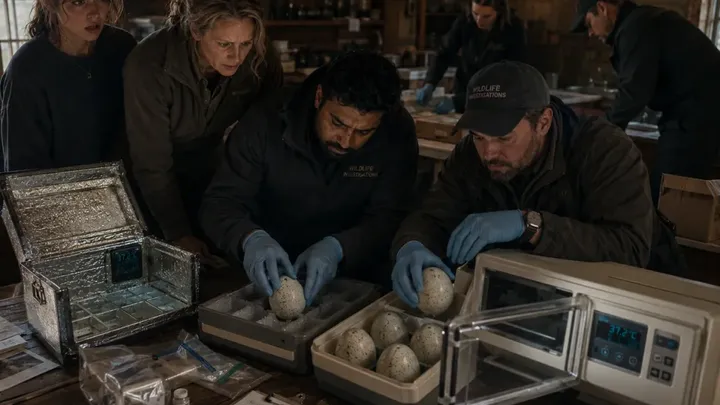
By the following day, specialists had identified the eggs with much greater confidence. Hannah told Leah they came from a protected falcon species and had almost certainly been stolen from nests overseas. Investigators had also uncovered a pattern. The group did not keep shipments in one place for long. They moved them between empty private homes until a buyer or courier was ready to collect them. Several houses linked to earlier suspicious activity had now been identified.
Investigators guessed why Evelyn’s house had been used. Some men transporting the eggs were being watched and needed somewhere to hide the container quickly. Graham knew Evelyn’s house was empty and still had a key, so the attic became an emergency hiding place. It was probably only meant to be temporary, but after Leah discovered the container, moving the eggs must've become far more difficult. The developing embryos needed a steady temperature and careful handling. The insulated box could protect them during a planned transfer, but not indefinitely. A longer journey required proper temperature-controlled equipment, and bringing that equipment to a house now attracting attention was too risky. A rushed move could kill the embryos, while a careful one could expose the traffickers.
Then they learned that another vacant house, less than fifteen miles away, could be used that evening. Investigators decided to use that information. The six eggs were moved safely into specialist care, while the same insulated container was prepared for the operation. The second house had stood empty for months, and whoever arranged the pickup seemed confident they could enter without attracting attention. Leah asked how they knew that. One investigator only said, “Someone has access to both houses.”