
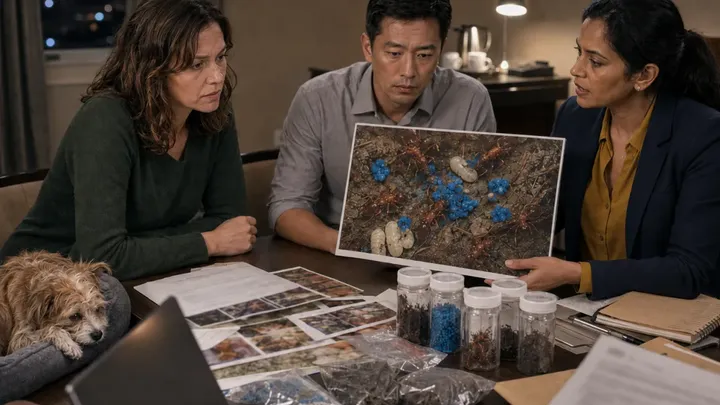
Daniel and Leila met Mary at the hotel. “The grains are an industrial absorbent,” he explained. Calder Industries must have once used the material to soak up chemical spills. Some had been buried with the drums. It absorbed lead, arsenic, and cadmium from leaking waste. Pip had swallowed it while grooming.
“But why would ants carry poison into their own nest?” Mary asked. Leila placed an enlarged photograph on the table. The ants were not attracted to the metals. The grains were light, easy to move, and good at absorbing moisture. Workers had used them to keep chambers dry around their larvae. The contaminants had no strong smell that deterred the ants. Their useful building material was slowly killing them.
Leila clarified another fear. “Their venom has not turned toxic,” she said. “But dust sticks to their bodies. It can be rubbed into sting wounds or transferred to skin, clothes, and fur.” Mary thought of the blue mark around her wrist. Her blood tests would need monitoring, though one brief exposure was unlikely to cause lasting harm. Daniel’s phone sounded before she could respond. A survey crew had found another mound across the street. Red ants were carrying the same blue grains towards its entrance.