
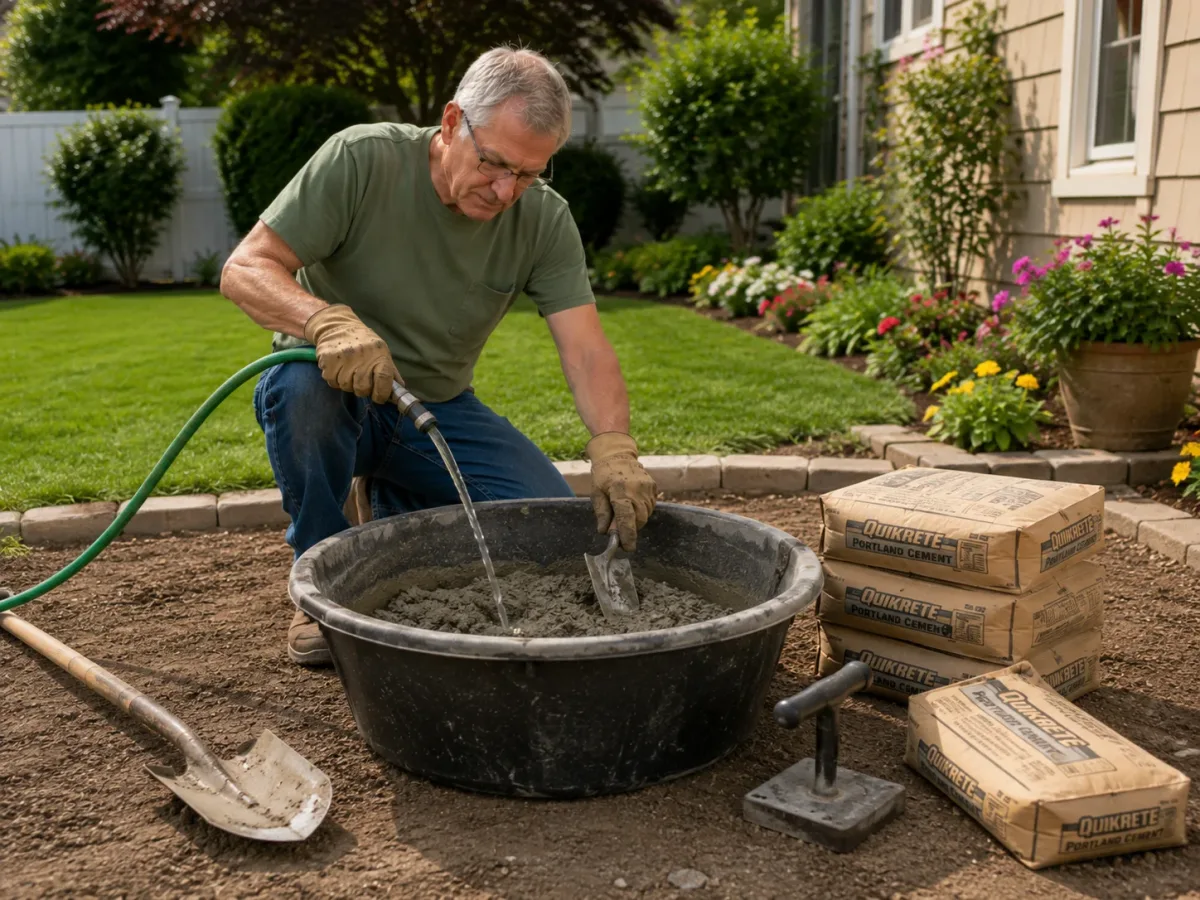
Mixing the Concrete Carefully
He poured a small amount of water into a mixing container before adding the dry concrete. Starting with water at the bottom prevented much of the powder from sticking. He then added more water gradually, stirring until the mixture became smooth enough to scoop but firm enough to hold its shape.
The consistency mattered. Concrete that is too dry can leave hollow spaces, while a watery mixture may spread too easily and become weaker. He worked in small batches so nothing began hardening before he was ready. This also reduced the amount of heavy lifting, which is worth considering if your hands, shoulders, or back tire more quickly than they once did.
There was no reason to rush. He kept everything nearby, including a chair for short breaks and a bucket of clean water for washing tools. Concrete can dry quickly on gloves and equipment, so regular cleaning made the job easier. When the mixture finally looked right, he reached for the first plastic bag. That was when the project became even more puzzling. Rather than pouring the concrete directly onto the ground, he carefully began spooning it into the bag.