
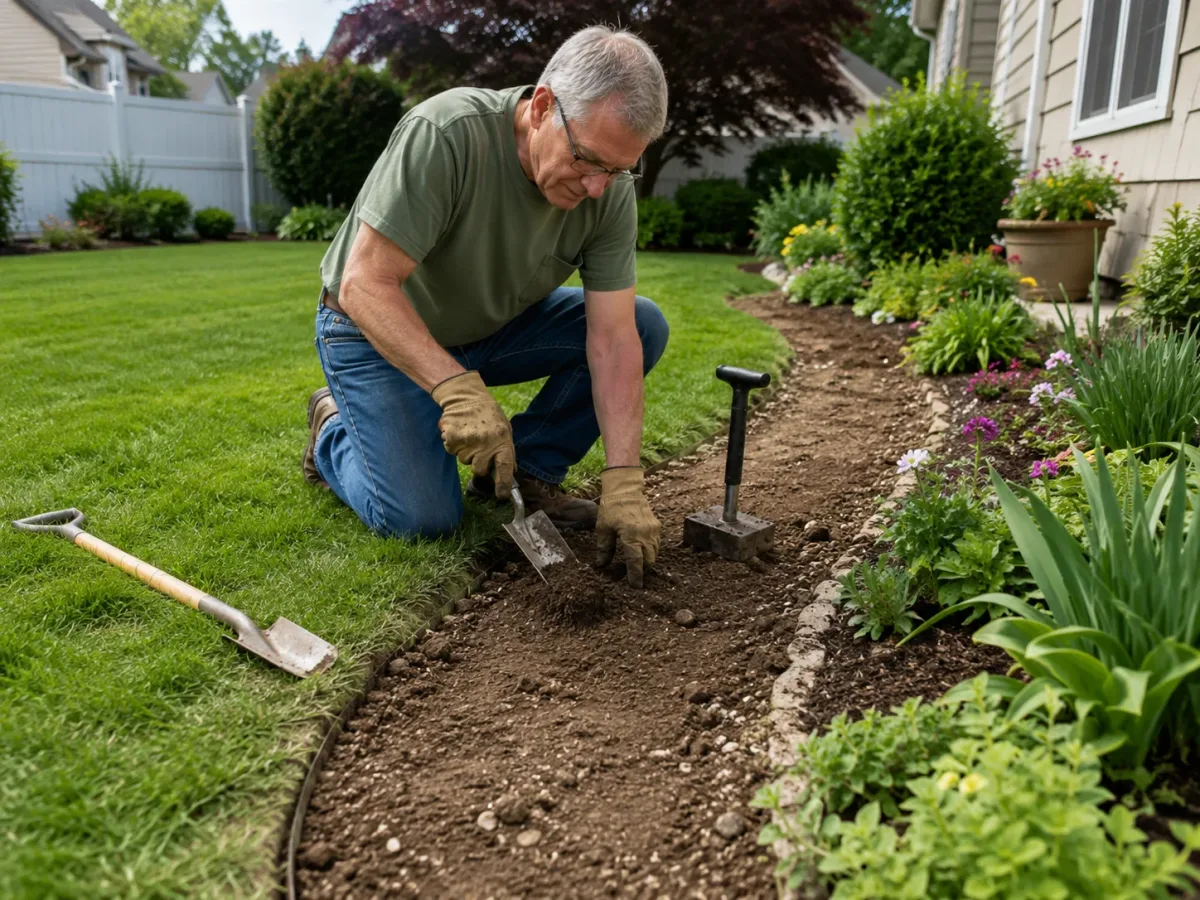
Preparing the Patch
Before opening the concrete mix, Tom removed grass, roots, stones, and loose soil from the chosen area. The ground did not need to be perfectly smooth, but it had to be firm and reasonably level. Any soft spots could cause problems later, so he pressed the soil down and filled several shallow dips.
This preparation was not especially exciting, but it was important. If you are attempting a garden project yourself, it is often better to spend extra time getting the foundation right. Correcting uneven ground at the beginning is much easier than repairing something heavy after it has hardened. A small hand tamper can help, although the back of a sturdy shovel may be sufficient for a modest area.
He also made sure water would not collect there after rain. Standing water can undermine outdoor projects and create slippery surfaces. Once satisfied, he marked a loose arrangement across the ground. It was not a perfect square or a straight line. Instead, the shape followed the natural space between the lawn and nearby plants. Whatever he was planning, it appeared designed to blend into the garden rather than dominate it.