
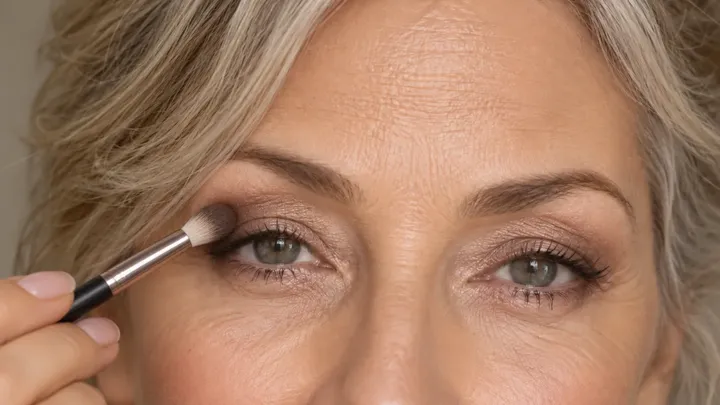
The eyeshadow palette in your bathroom drawer might be the same one you've used for years. And so might your habit of brushing a shimmery shade across your entire eyelid. But if your eyes have become more hooded with age, that familiar technique might not give you quite the same result.
A well-known Spanish makeup artist says shimmer eyeshadows are beautiful but can be surprisingly tricky. His explanation is simple: shimmer reflects light, making the area where it's applied appear fuller. When the skin above the eyelid has started to fold or droop, that extra shine can draw attention to the fold and make the eyes appear heavier.
His advice isn't to abandon shimmer altogether. It's to change where you put it.
Why shimmer can make hooded eyes look heavier
In a recent article published by El Español, Serrano explains that one of the most common makeup mistakes for hooded eyes is applying too much shiny eyeshadow.
Metallic, glittery, and satin finishes all reflect light to different degrees. That's often exactly why we like them: they brighten the eyelid and give the eyes a little sparkle.
But when shimmer covers the entire lid, including the skin that folds over it, the shine can emphasize that area rather than create the softer definition you wanted.
This is an optical effect, not a rule about looking a certain age. If you love glittery eyeshadow, there's no reason to stop wearing it. The trick is understanding how the finish changes the appearance of your eyelids.
Don't throw away your shimmer eyeshadow just yet
Serrano's advice is more about placement than replacing products. A little shimmer in the right place can still brighten the eyes beautifully.
Other makeup artists offer more specific guidance. In British Vogue's guide to hooded-eye makeup, professional makeup artists recommend keeping light-reflecting products concentrated around the inner corners, rather than spreading them across the entire hooded area.
A tiny amount of finely textured shimmer near the inner corner can catch the light without highlighting every fold. Some makeup artists also suggest a small touch on the visible movable lid.
The important difference is quantity. You want a little brightness in one area, rather than shine covering everything.
Why matte and satin shades are worth trying
Spanish makeup artist Cristina G. Nuevo offers another useful suggestion.
Speaking to El Español on October 26, she explains that satin shades with a subtle sheen can add brightness, while matte eyeshadows help define the eye socket more softly.
The distinction matters. Matte shades don't reflect much light, making them useful for creating depth. Satin shades give a gentler glow, while metallic finishes have a noticeably stronger shine.
Nuevo also recommends considering your eye color when choosing eyeshadow. A shade that contrasts with your iris can help bring out your natural eye color, although your skin tone and personal preferences matter too.
How to use the eyeshadow palette you already own
You don't need to buy anything new to experiment with this technique.
Start by swatching three shades from your existing palette on the back of your hand in daylight. A matte shade looks relatively flat, satin has a soft glow, and metallic or glittery shades reflect more noticeable light.
Then try this simple three-step routine:
- Define the crease. With your eyes open, blend a neutral matte shade slightly above your natural crease, where the color remains visible.
- Keep the lid soft. Sweep a light matte or subtle satin shade over the visible eyelid, avoiding heavy layers on the fold.
- Add a touch of light. Use a small brush to place a tiny amount of finely textured shimmer at the inner corner. Blend gently.
The placement advice is consistent with professional techniques described by Glamour UK's makeup artists.
If you also want to soften your eyeliner, our earlier article explains why makeup artists sometimes recommend burgundy eyeliner instead of black after 50.
The biggest lesson is that makeup doesn't have to become more complicated as you get older. Sometimes, keeping the same favorite colors and simply changing where you apply them makes all the difference.