
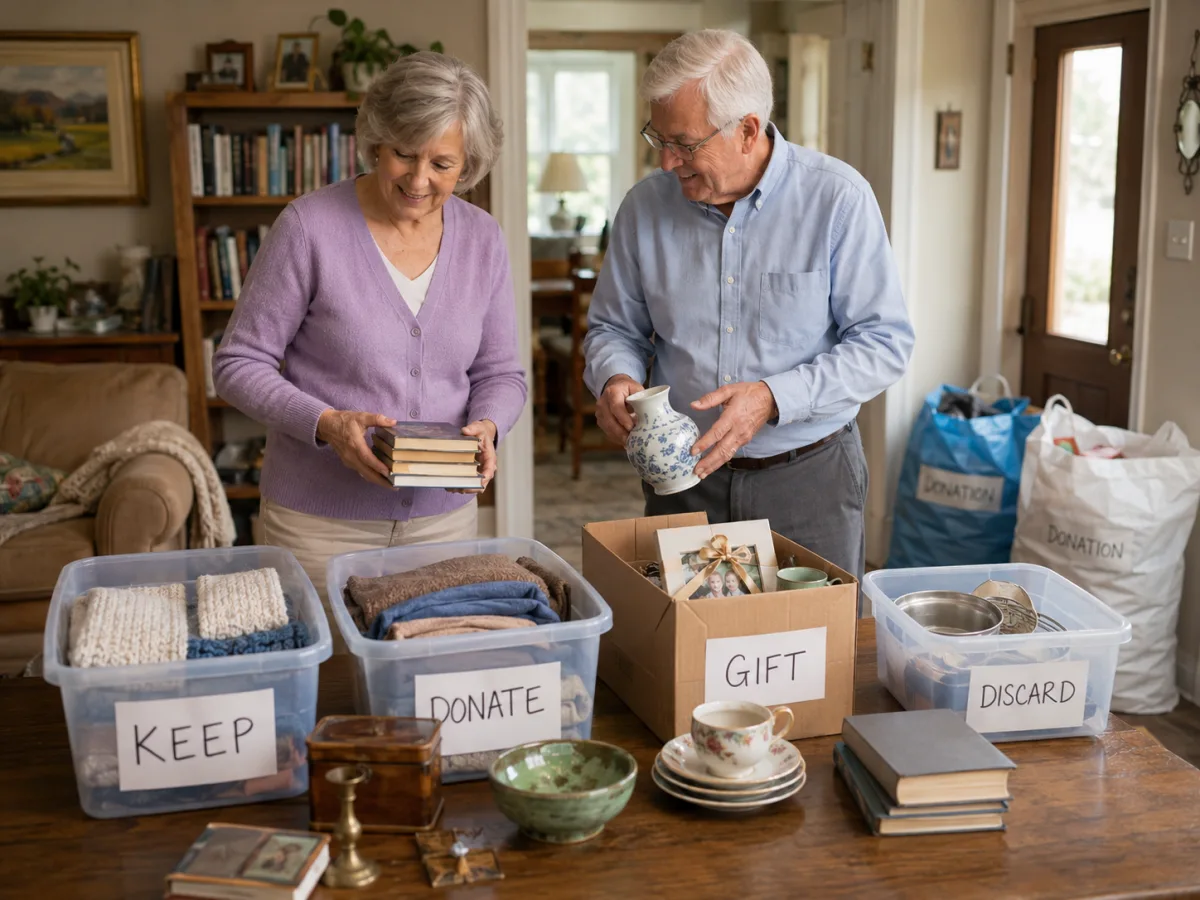
3. Give Things a Destination
The next step was deciding where everything should go. We found it easier when every object had only four possible destinations: keep it, give it to someone, donate or sell it, or throw it away if it was no longer useful. We avoided creating a fifth pile called “decide later,” because that was usually how clutter survived from one cleaning session to the next.
For anything we kept, we asked whether it had a place. If it did not, we either made room for it or reconsidered whether it deserved to stay. Donations went into bags near the door. Rubbish left the house quickly. Items for family members were labeled with names. We also stopped saving inexpensive things to sell unless we believed they were worth the effort.
This was also when we began giving certain special things away. A useful kitchen item we no longer used went to someone who loved cooking, while a few books went to relatives who had always admired them. We asked first rather than assuming people wanted our possessions. That made the process surprisingly enjoyable. Instead of wondering who might want something years from now, we could pass it on, tell its story, and see someone enjoy having it.