
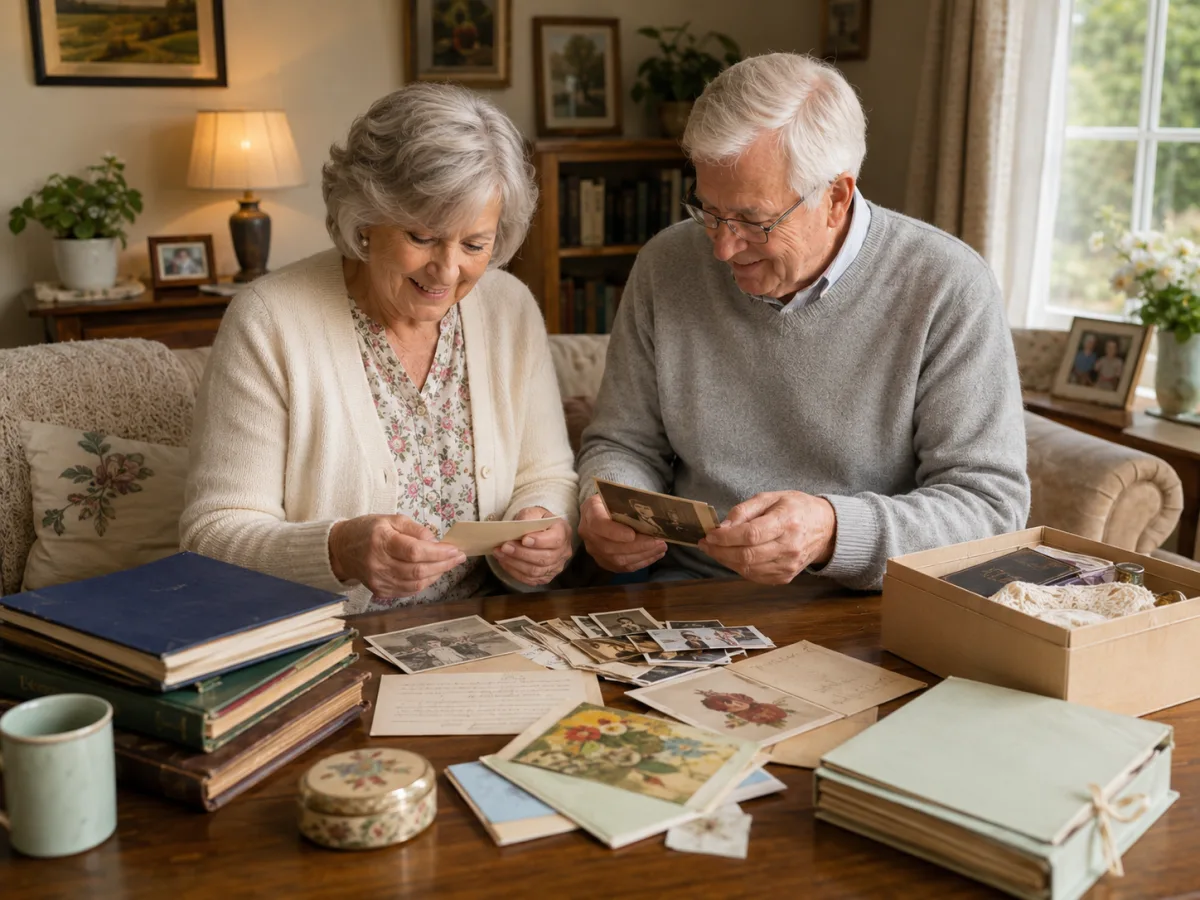
4. Save the Memories Until Last
We left photographs, letters, cards, and keepsakes until the end. These were the slowest things to sort. By then, however, we had already practiced making decisions on easier possessions. We kept the photographs that told clear family stories, removed duplicates, and wrote names or dates on pictures when we knew them. Special items were set aside to share with relatives.
We also went through paperwork, old manuals, expired guarantees, and forgotten folders. Important documents were grouped together, while papers containing personal information were shredded when they were no longer needed. We made sure trusted family members knew where essential documents could be found. For legal, financial, or estate matters, we would still use professional advice rather than relying on a home organizing system.
The lesson is that Swedish death cleaning works better as a habit than as one exhausting project. We now look at one drawer, shelf, or cupboard from time to time and ask what has stopped being useful. The house still feels like our home. We still have books, photographs, decorations, and sentimental things. There is simply less to manage. The method may sound gloomy at first, but for us it made everyday life feel lighter, calmer, and easier.