
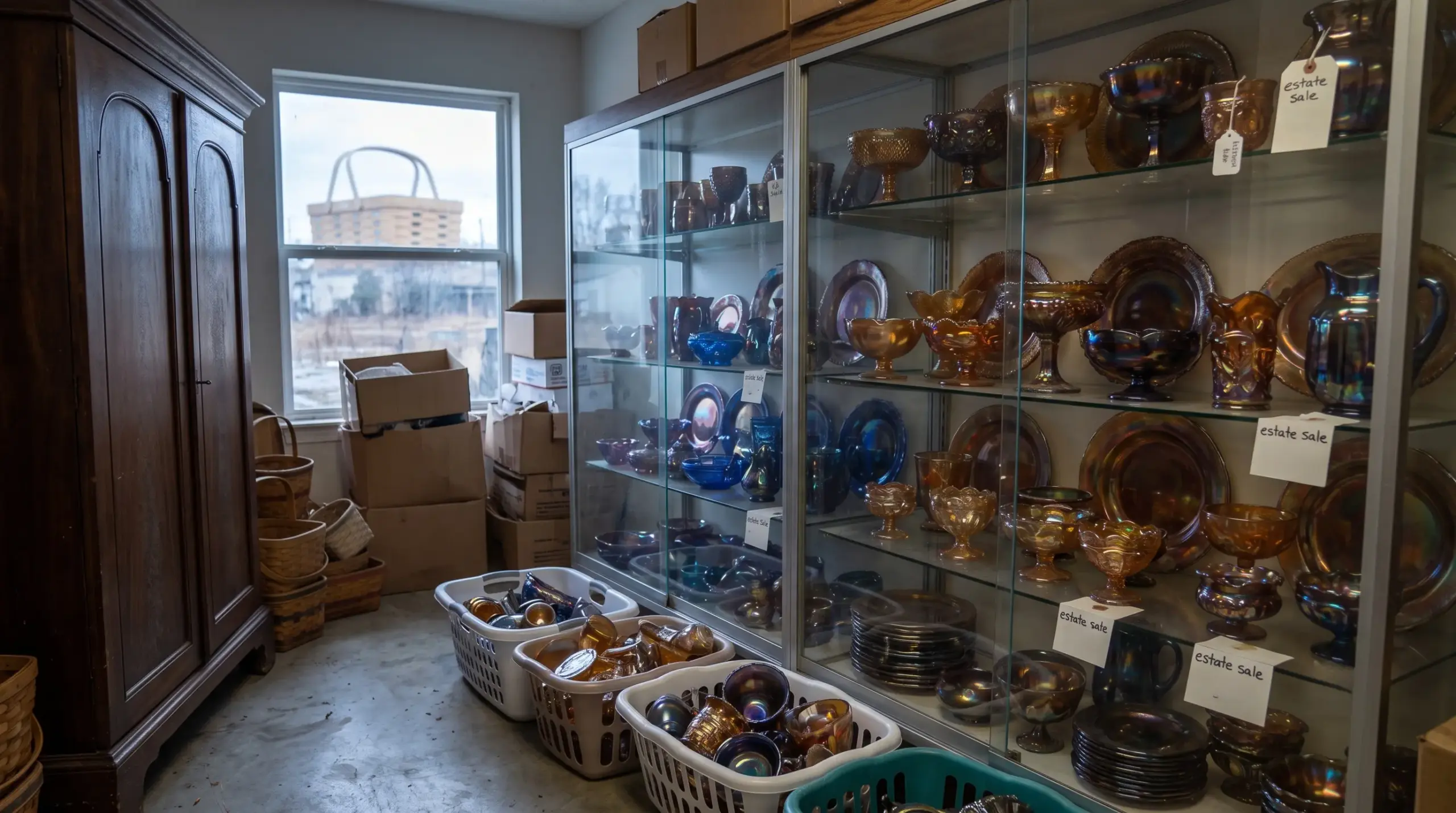
Iridescent Carnival Glass (No. 18)
Carnival glass gets its name from its humble origins in the early 1900s, when it was manufactured as cheap, pressed glassware coated with metallic salts to mimic high-end blown glass. Because it was inexpensive to produce, it was widely given away as prizes at carnivals and fairgrounds. However, mid-century collectors fell in love with its distinct, oil-slick iridescent sheen, sparking a massive mid-to-late 20th-century collector boom where rare patterns regularly changed hands for hundreds of dollars.
Today, carnival glass has become practically worthless due to a harsh demographic shift. The generation that passionately collected this glassware has aged out of the market, and their massive collections are simultaneously hitting thrift shops, flea markets, and estate auctions. Younger demographics show almost zero interest in decorative glass candy dishes and footed bowls, viewing them as outdated clutter that requires tedious hand-washing. While highly specific, rare 1910 pieces from premium manufacturers like Northwood still retain value among niche historians, the everyday plates, bowls, and pitchers that populated thousands of curio cabinets now sell for under $10.