
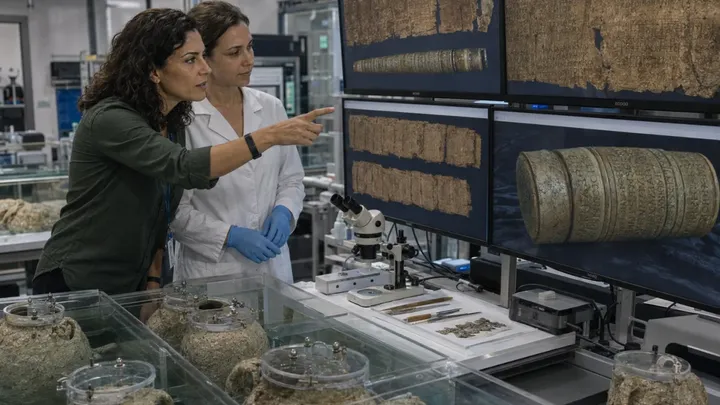
The recovered objects went to a specialist conservation facility after the ship reached port. Elene went with them. The jars stayed sealed while researchers scanned their interiors. Weeks passed before the first useful images appeared. Several containers clearly held rolled manuscripts. The papyrus was fragile and compressed, but it was there.
The bronze catalogue cylinder produced the first major breakthrough. Imaging revealed lists of authors and titles inside. Some works were familiar. Others were known only from later references. A few titles were unknown. Elene found the name she had seen on the broken scroll underwater. Her finger stopped over the scan. “There it is,” she said. A conservator smiled. “And maybe a copy is in one of those jars.”
Elene knew it could take years to find out. A larger expedition was already being planned to stabilize the surviving bow and search the lower slope. She thought of the people who had sealed those manuscripts two thousand years earlier because the words were worth saving. They had never reached safety. Yet five jars and three cylinders had survived the sea, the wreck, and the collapse. At last, part of their cargo had finished the journey.