
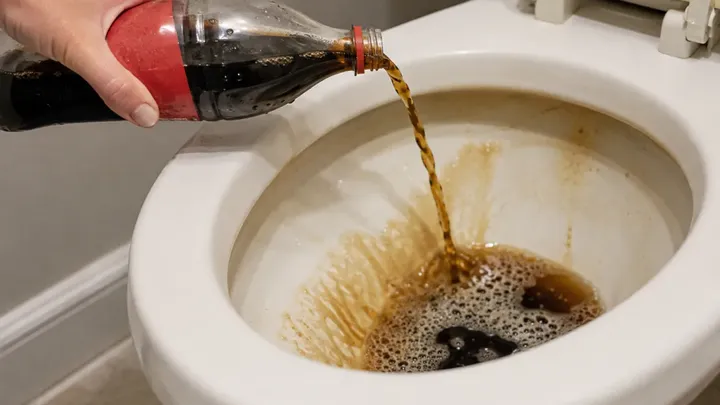
She slowly poured the Coke around the inside edge of the toilet bowl. Instead of tipping everything into the water at once, she moved the bottle carefully around the rim. The brown liquid flowed down the porcelain and covered the stained areas. Soon, the water inside the bowl became dark and fizzy. It certainly did not look cleaner yet. In fact, anyone entering the bathroom at that moment might have thought something had gone badly wrong.
Once approximately half a liter had been added, she placed the empty bottle aside. She did not flush the toilet or immediately attack the marks with a brush. The drink needed time to remain in contact with the deposits. Its mild acidity would gradually begin loosening some of the grime, particularly around the waterline. For the experiment to have a fair chance, patience was more important than vigorous scrubbing.
She closed the toilet lid and left the Coke to sit. A short soak might help with light discoloration, although tougher deposits generally need considerably longer. Leaving it for at least an hour—or even overnight—allows the liquid more time to work. During this period, nobody should use or flush the toilet. The bowl remained filled with an unappealing dark mixture, and there was still no evidence that the bizarre method had achieved anything useful.