
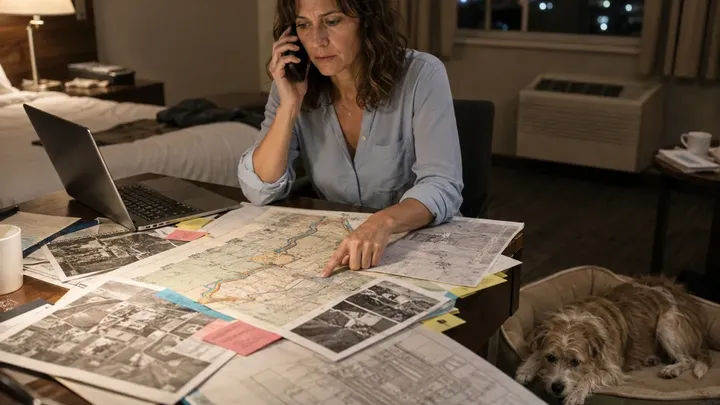
Mary stayed at a hotel while Pip slept beside her bed. By morning, his breathing was steadier. Unable to rest, she searched old property maps. The cottage had once stood beside Calder Agricultural Products, a factory that made pigments, pesticides, and metal treatments until 1987. The factory was gone, replaced by houses and a playing field.
Official records said the site had been cleared. A map showed a service road cutting behind the factory and crossing Mary’s present garden. She found the name of a driver, Arthur Bell, and called him. He hesitated. Then Mary mentioned trucks travelling after dark during Calder’s final months.
Arthur became quiet. “We collected sealed drums from the rear warehouse,” he said. “No labels. No paperwork for the drivers.” “Where did you take them?” Mary asked. “A supervisor waited near the service road. He directed us, then sent us back.” Arthur insisted he had never seen the drums opened or buried. Still, his voice shook. Mary sent the map to Daniel Cho, the environmental investigator now leading the survey. Minutes later, he called her. Radar had traced the vanished road beneath her garden. It passed directly under the giant ant nest.