
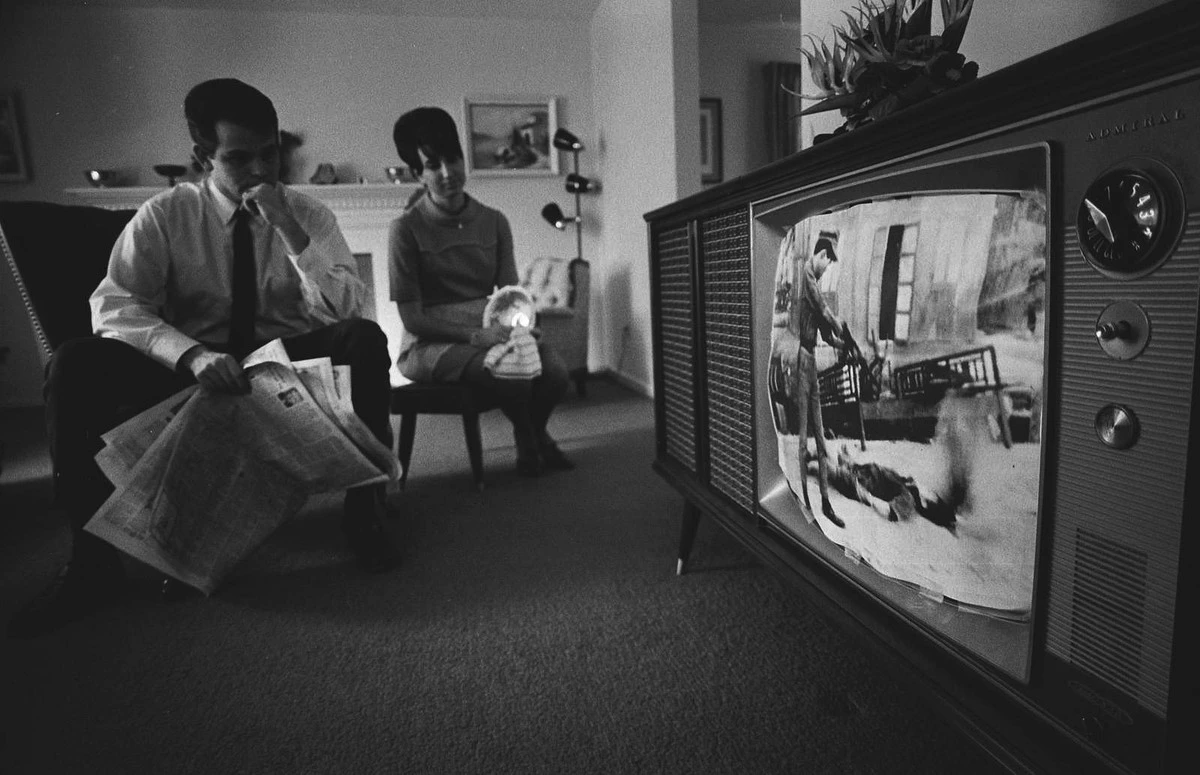
Photo Credit: Leffler, Warren K/ Wikimedia Commons
6. Why did television matter so much?
Vietnam is often called the first “living room war” because television brought images of the conflict into ordinary homes. Viewers saw wounded soldiers, burning villages, body counts, protests, and press briefings. The war was not hidden behind official statements alone. It arrived after dinner, between commercials, in black and white.
That changed the relationship between citizens and government. When official optimism clashed with visible suffering, public trust began to crack. People could see enough to ask harder questions. Was victory close? Were the costs worth it? Were leaders being honest? Television did not create all the opposition to the war, but it made the war harder to package neatly.
Today, social media has taken that role and multiplied it. Conflicts now appear through phone footage, drone videos, livestreams, and edited clips. Vietnam was an early warning that wars are fought not only on the ground, but also on the screens where the public decides what it believes.