
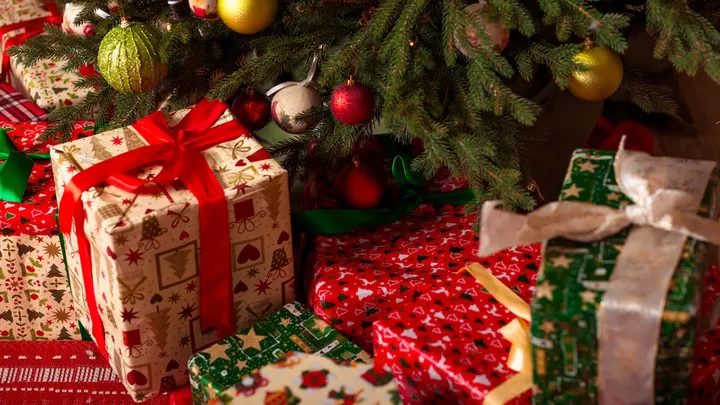
Once the Christmas presents have been opened, the living room is often covered in torn wrapping paper, ribbons, and colorful bows. Gathering everything into one big pile and putting it in the recycling bin might seem like the sensible thing to do. However, not all wrapping paper is suitable for recycling.
In Britain, recycling experts recommend a simple test involving squeezing a piece of paper into a ball. Meanwhile, Dutch environmental organization Milieu Centraal suggests checking how easily the paper tears.
Both methods take only a few seconds. But there's one particular type of wrapping paper that can pass these tests and still be unsuitable for recycling.
The simple scrunch test
The British recycling campaign Recycle Now recommends what's known as the scrunch test. It's a handy way to distinguish ordinary wrapping paper from varieties containing other materials.
Take a piece of wrapping paper, squeeze it into a ball between your hands, and then release it. If it stays crumpled, there's a good chance it's suitable for paper recycling. If it springs back open, it may contain plastic or metallic foil.
Interestingly, the American Forest & Paper Association recommends the same test for American households. However, whether the paper is accepted ultimately depends on your local recycling program.
Try tearing the paper instead
In the Netherlands, where families exchange presents during Sinterklaas celebrations on December 5, another method can help determine which paper belongs in the recycling bin.
According to Milieu Centraal, paper coated with plastic on both sides is generally difficult to tear and cannot be recycled with ordinary paper.
Interestingly, Dutch recycling guidelines allow certain types of paper with a plastic coating on just one side. This means that paper that fails the scrunch test isn't necessarily unsuitable for recycling in the Netherlands.
A glossy finish alone doesn't always mean that paper cannot be recycled, either. The material used to create that finish makes a difference.
Glitter is the exception
Even if your wrapping paper stays in a tight ball and tears easily, take a closer look at its decorations.
Wrapping paper covered in glitter should generally stay out of the recycling bin. Michigan's Department of Environment, Great Lakes, and Energy explains that glitter can contaminate the recycling process. Metallic wrapping paper is also rejected by most curbside recycling programs.
If you have any large, undamaged pieces of decorative wrapping paper left over, consider saving them for another occasion rather than throwing them away.
Do you need to remove the tape?
Peeling every little piece of clear tape off discarded wrapping paper can be a tedious job. Interestingly, recycling advice differs between countries on this point.
Recycle Now recommends removing adhesive tape, explaining that wrapping paper with large amounts of tape is particularly difficult to recycle.
However, the Dutch Afvalscheidingswijzer states that paper with a small piece of tape attached can still go in the paper recycling bin. Small pieces of plastic can be separated during processing.
In the United States, local requirements vary. The safest approach is to remove as much tape as reasonably possible, along with ribbons, bows, and other non-paper decorations.
Why some recycling programs refuse wrapping paper
Even ordinary wrapping paper isn't accepted everywhere. Some recycling facilities reject it because it contains relatively few useful paper fibers or because coatings, dyes, and decorations make it difficult to process.
The US Environmental Protection Agency (EPA) therefore recommends checking with your local recycling provider before putting gift wrap in the recycling bin.
Whatever your local rules, keep recyclable wrapping paper clean and dry. Paper that has absorbed spilled drinks or become covered in food residue should be kept separate.
And when shopping for your next batch of Christmas presents, consider choosing simple brown kraft paper or reusable gift bags. Not only will this make the post-Christmas cleanup easier, but you might also save yourself some money next year.