
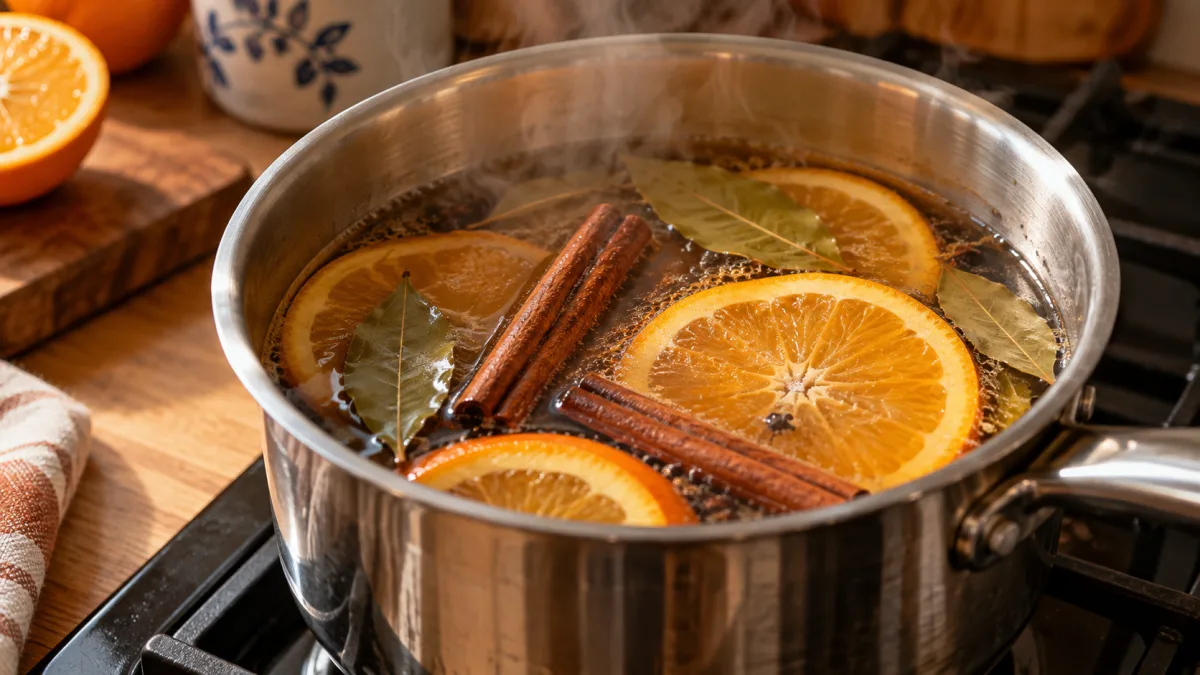
As soon as the windows close for autumn, cooking smells and stale air hang around longer. An old kitchen habit is back for that reason: a small pan of water with a few bay leaves and cinnamon sticks, left on the lowest heat. A viral post is sharing it this week as a way to make the house smell good. Some will go further and call it air purification.
A simmer pot can scent a kitchen within ten to twenty minutes, according to one home test, and it can keep going for a few hours if topped up. What it does not do is remove pollutants or actually clean the air. Think of it as a stovetop fragrance. And one rule matters more than the recipe: never leave the pan unattended.
How to make the viral bay leaf and cinnamon pot
The version currently circulating uses four bay leaves, two cinnamon sticks and about one litre of water. Put everything in a small saucepan, bring the water to a boil, then immediately lower the heat until it is only gently simmering.
You do not need to follow those quantities exactly. A home test using bay leaves alone started with four or five leaves in about two cups of water. The writer noticed the herbal smell around the stove after roughly 10 to 20 minutes, although room size, airflow, and the strength of the leaves all affect the result.
Leave the lid off so the scented steam can escape. As the water level falls, top it up so the ingredients stay covered. Clemson University's Home & Garden Information Center describes simmer pots as a simple way to fragrance a home with fruit, herbs and spices and says a pot can keep going for a few hours.
It scents the air, but it does not clean it
Heating bay leaves, cinnamon, citrus peel or cloves releases aromatic compounds into the steam, so the room smells different. That is not the same as filtering the air or removing the molecules responsible for cooking smells.
If the kitchen still smells of frying or fish, opening a window or using the extractor hood is the better way to remove those smells at the source. A simmer pot can add a fresher or warmer fragrance afterward, but it should not be described as an air purifier. That distinction matters because some articles circulating online use the stronger "purify" claim.
Orange peel left from breakfast, an apple core, cinnamon sticks or a few cloves can all go into the water, making this an easy way to use scraps that might otherwise be thrown away.
Three combinations worth trying
For the simplest version, use bay leaves alone for a light herbal smell. For the combination going viral now, add two cinnamon sticks for a warmer note. Or try cinnamon with orange peel and a few whole cloves for a more familiar autumn-and-winter fragrance.
Treat the amounts as a starting point rather than a formula. The useful part of the trend is simple: a little water, low heat, and ingredients already in the kitchen can make a closed-up autumn house smell more inviting, as long as someone is keeping an eye on the pan.
The one condition: stay nearby
A pan on the stove is still a pan on the stove. Water slowly evaporates, and if the pot boils dry the ingredients can scorch.
The National Fire Protection Association reports that, in its 2017–2021 US data, unattended equipment was a factor in 25% of reported home cooking fires. Its guidance also says people should stay home and check regularly when something is simmering.
In the Netherlands, Veiligheidsregio Zuid-Holland Zuid says 20% of house fires begin in the kitchen, including cases where material near a hot pan or stove catches fire. The practical advice is to stay in the kitchen or use a timer so you do not forget what is on the heat.