
Wheat pennies, and how to check yours
Pennies from 1909 to 1958 have two ears of wheat on the back. Most are worth just a few cents, but two dates are worth looking for. The 1909-S VDB has a small S under the date and the designer's initials, V.D.B., at the bottom of the back; only 484,000 were made, and even worn ones usually sell for $500 or more. The 1914-D, with a D under the date, can sell for about $70 to several hundred dollars when worn, and well over $1,000 in sharp condition.
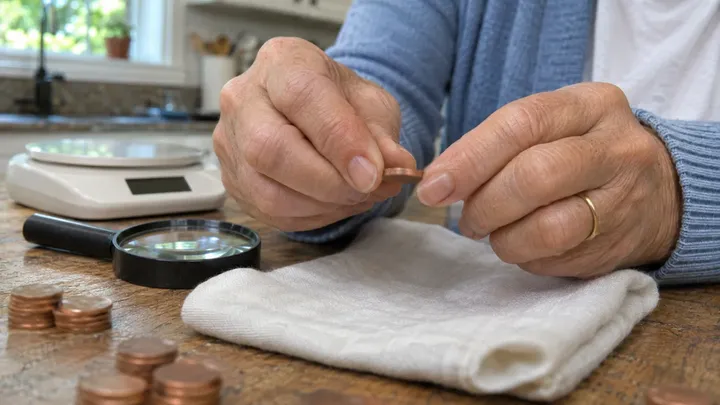
How to check: sit by a window in good daylight with a magnifying glass, ideally one that magnifies 5 to 10 times. Hold each coin by its edges. Read the date and look for a small letter under it: D for Denver, S for San Francisco, and on older pennies, no letter for Philadelphia. Compare anything promising with photos of genuine coins in a trusted collectors' guide. And never clean a coin. Polishing, scrubbing, or dipping strips its original surface; collectors can tell at once, and a cleaned rare penny can lose a large part of its value.
Fakes are everywhere, especially for the famous dates: copper-plated steel 1943s, altered dates, and mint letters or initials added by hand. So if you think you've found one, don't sell it to the first buyer online. Take it to a reputable coin dealer, or send it to a professional grading service that checks and seals coins for collectors. And if it turns out to be an ordinary penny? It is still worth one cent. But it only takes a few minutes to find out.