
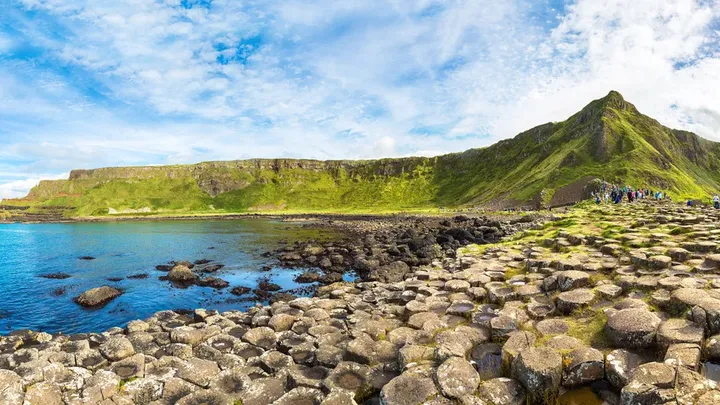
For years, visitors to the Giant's Causeway pushed coins into the cracks between the basalt columns, for luck or for love. Salt spray makes the coins rust, and rusting metal swells. The National Trust says the habit is damaging the World Heritage Site, and more than 10,000 coins have already been taken out.
The appeal to visitors is to leave nothing behind. For anyone planning a trip, the clean-up raises other questions. When do you get the columns without the tour groups? What changes in winter, and how far do you have to walk?
The answers shape the visit. Many people walk the short path down to the main formation, take their photo and leave. A steep staircase in the cliff leads to a view that plenty of them skip.
Why tourists are being asked to stop leaving coins
The Giant's Causeway consists of around 40,000 interlocking basalt columns, formed by volcanic activity roughly 60 million years ago.
For decades, visitors have wedged coins between these ancient stones. But according to the National Trust, the tradition is causing serious damage.
When seawater reaches the coins, corrosion makes the metal expand. Some coins can swell to three times their original thickness, putting pressure on the surrounding basalt and causing pieces to break away.
In August 2026, the BBC reported that conservationists had removed more than 20 kilograms of coins, equivalent to approximately 10,000 pieces. The Causeway Coast & Glens Heritage Trust also describes an extensive conservation program.
Visitors are now encouraged to leave nothing behind. If you're tempted to make a wish at the famous Wishing Chair, take a photograph instead.
The best time to visit Giant's Causeway
If you want photographs without dozens of other visitors in the background, timing makes a considerable difference.
The busiest period is generally late morning through mid-afternoon, when organized tours from Belfast and Dublin arrive.
For a quieter experience, aim to reach the stones before 10am, or visit toward the end of the afternoon while there's still daylight.
The good news is that the coastline remains accessible outside the visitor center's operating hours. The National Trust currently lists coastal access from dawn until dusk.
Winter can be particularly rewarding. There are generally fewer visitors, while the low sunlight brings out the grey and copper tones of the basalt.
According to Visit Derry, the Visitor Experience operates from 10am to 4pm until March 2027, with last admission at 3pm.
Remember that winter days are short, and rough seas can make the rocks dangerous.
The 162 steps many visitors overlook
Most visitors follow the lower path to the Grand Causeway, roughly a 20-minute walk from the visitor center.
But there's another route worth considering.
The Red Trail is a 3.2-kilometer (2-mile) clifftop walk with sweeping views across the coastline.
It connects with the Shepherd's Steps, a staircase of 162 steps descending toward the shore.
A good option is to take the higher path first, descend the steps, and explore the basalt columns before returning along the lower road.
Beyond the main formation, look for unusual rock features such as the Organ and the Giant's Boot. Farther along, the dramatic cliffs form a natural amphitheater.
The trail includes steep, uneven sections and exposed cliff edges. Wear sturdy shoes, keep away from the edges, and check conditions before setting off.
How to get there without renting a car
You don't need a rental car to visit Giant's Causeway.
Travelers can take the train to Coleraine or Portrush, then continue by bus toward the coastline.
Translink lists Ulsterbus routes 172, 402 and 402a serving the Giant's Causeway area, although services and frequencies vary by season.
Check the Translink journey planner before traveling, particularly during winter.
And if you're planning a visit, allow time for more than just the famous columns. The clifftop views, changing sea conditions, and quieter stretches of coastline are all part of what makes this remarkable place worth exploring.