
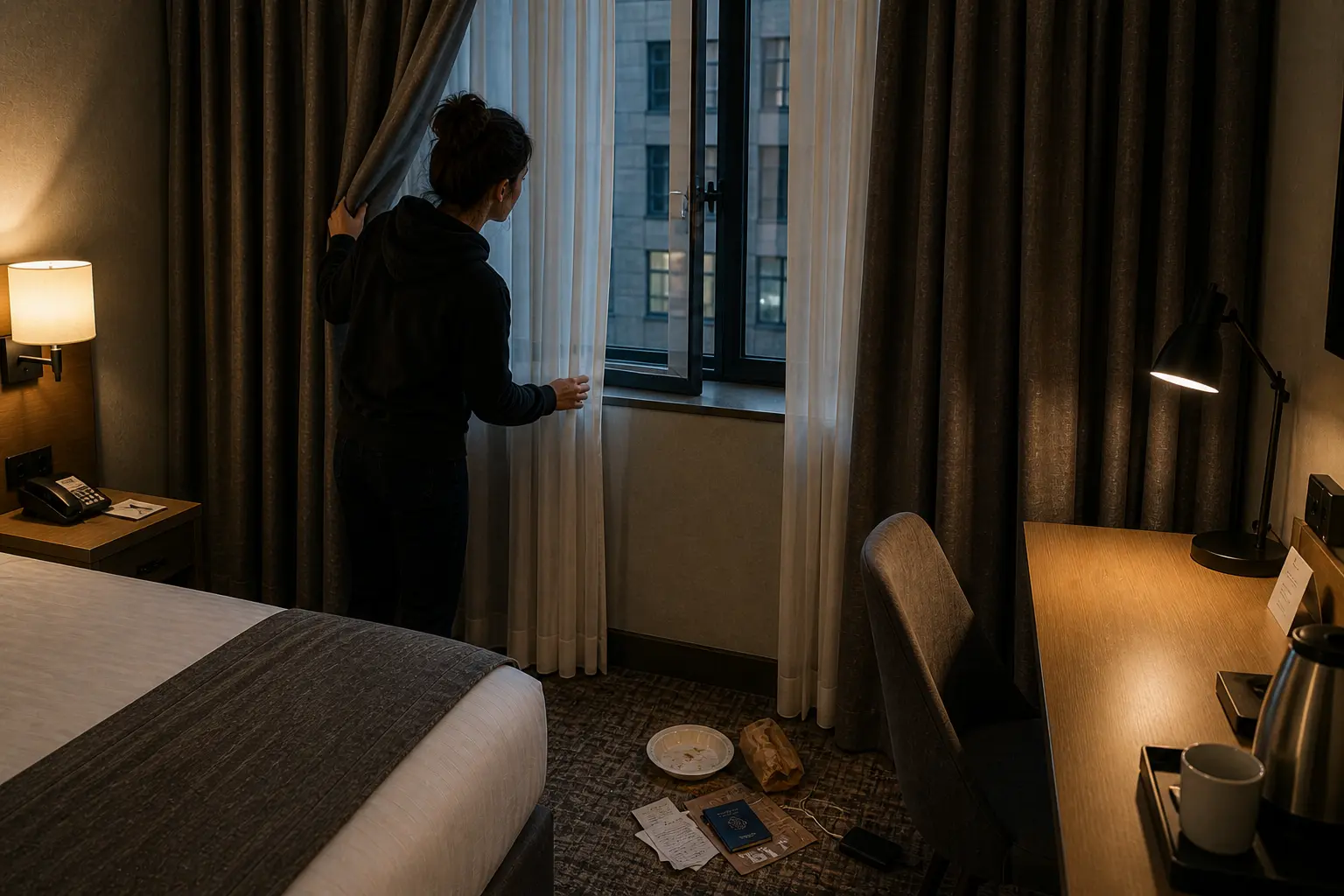
The "blind spot" in question is the heavy, floor-to-ceiling expanse of the hotel curtains. Because these drapes are designed to be thick and stationary, we treat them as a permanent wall. But the moment you pull them back, you realize they are a partition hiding a significant, unmonitored zone. This is where the "check" becomes vital for a reason most travelers overlook: structural safety. In many hotels, housekeeping will crack a window to vent cleaning fumes.
If they fail to re-latch it, that heavy fabric hides a literal drop to the street. For a small child playing hide-and-seek, the space behind the curtain is an instinctive magnet—and an unlatched window there is a catastrophe waiting to happen. Beyond the physical danger, this area serves as the ultimate "litmus test" for the room’s hygiene. Because it is rarely scrutinized by the staff's daily cleaning rotation, the windowsill and the floorboards behind the fabric become a collection point for deep-seated neglect.
You aren't looking for a guest's lost phone; you are looking for the tell-tale signs of a rushed "turn-down"—dust bunnies, dead insects, or discarded trash from weeks ago. If these remnants are lingering, it is your first and most reliable warning: this room was never truly deep-cleaned.
But here's the most important thing to keep in mind: