
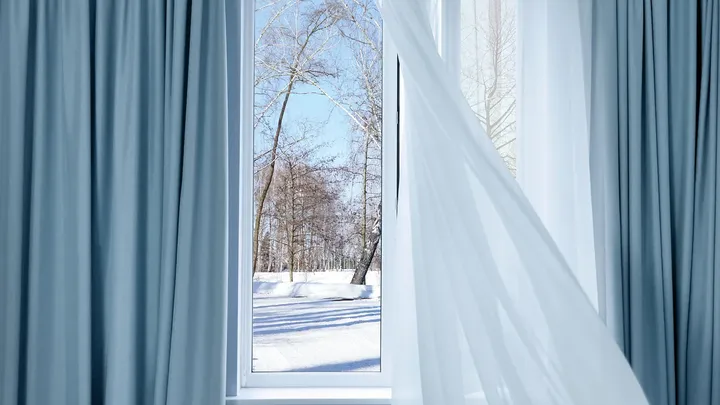
As soon as the temperatures drop and the heating goes back on, keeping your home warm and comfortable becomes a daily balancing act. You want fresh air in the bedroom, kitchen, and bathroom, but you don't want to let all that expensive heat escape. Many people have their own habits when it comes to opening windows during the colder months, often without giving them much thought. But the way you let fresh air into your home can make a bigger difference than you might expect.
The German five-minute rule
Germany has a surprisingly specific approach to airing out homes. The German environment ministry recommends something called Stoßlüften: opening windows wide several times a day, for just five to ten minutes in winter. It might sound strange to throw your windows wide open when you're paying to heat the house. But experts say this approach can refresh the air more quickly than leaving a window slightly open for hours. According to the Federal Environment Ministry, windows should be opened several times fully throughout the day.
In winter, five to ten minutes is generally enough. During summer, when indoor and outdoor temperatures are closer, the recommendation increases to 20 to 30 minutes. Ideally, you open windows on opposite sides of the house to create a cross-breeze. This helps replace stale indoor air much faster. The German Environment Agency also recommends short, intensive airing rather than keeping windows tilted for long periods.
Why leaving a window tilted can cost you more
A slightly open window might seem like the sensible compromise. You're getting fresh air without exposing the entire room to the cold.
Unfortunately, it doesn't quite work that way.
According to a leading energy advice website, refreshing the air through a tilted window can take around an hour, depending on the room and window size. Opening windows on opposite sides can reduce that to roughly five minutes.
The problem isn't just the slow exchange of air. A window left tilted for hours allows the surrounding wall and window frame to become cold.
When warm, moist indoor air meets these colder surfaces, condensation can form. Over time, persistent dampness can encourage mold growth.
Meanwhile, your heating system may continue working to replace the escaping warmth.
Dutch experts agree, but there's an important difference
In the Netherlands, experts distinguish between ventileren (continuous ventilation) and luchten (briefly airing out a room). The distinction matters.
According to sustainable living experts, a home needs a continuous supply of fresh air, usually through ventilation grilles, small openings, or a mechanical system. Opening windows wide for a short period provides additional fresh air, particularly after cooking, showering or having visitors.
Specialists recommend opening windows opposite each other for up to ten minutes daily. Public health departments describe airing periods of around ten to fifteen minutes.
But here's the crucial point: briefly opening your windows does not replace continuous ventilation.
If your home relies on trickle vents or ventilation grilles, don't close them just to save heat. They should remain open day and night. Homes with balanced mechanical ventilation should follow their system's instructions.
One important step before opening the windows
There's another thing that many people overlook: turn down the radiator thermostat before opening the window. Otherwise, the sudden rush of cold air can make a thermostatically controlled radiator work harder, wasting energy while the window is open.
Once you've finished airing the room, close the windows and return the heating to its normal setting. For an ordinary cold winter day, five to ten minutes with windows wide open is a useful starting point. On milder autumn days, exchanging the air may take longer.
You can also monitor humidity with an inexpensive hygrometer. German consumer advice centers recommend a relative humidity of around 40 to 60 percent for comfortable indoor conditions, while the US environmental agency suggests 30 to 50 percent.
The lesson isn't to keep every window shut all winter. It's to air rooms quickly when needed, keep everyday ventilation running, and avoid heating the outdoors.