
The Brilliant Reason
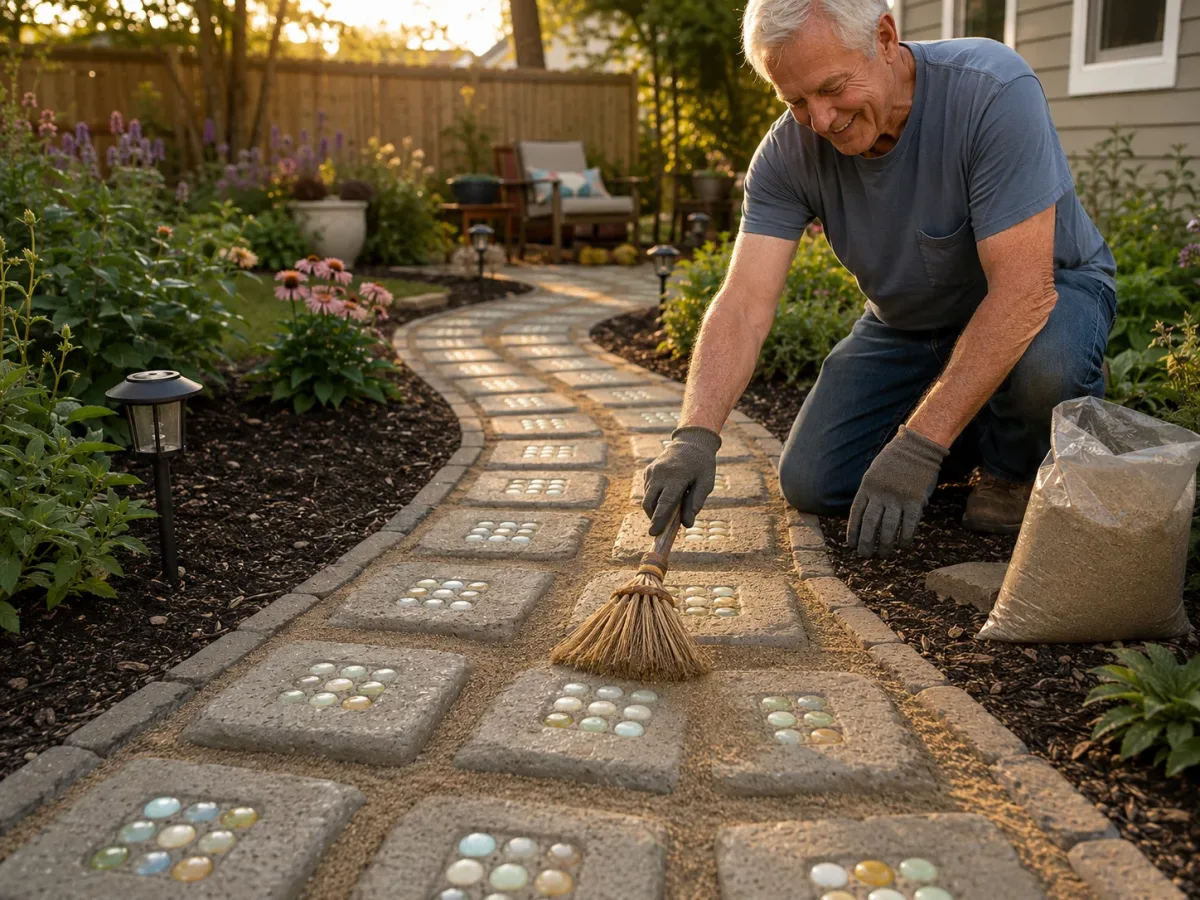
He poured dry sand across the hardened concrete pieces and swept it into every gap with a stiff broom. The sand filled the spaces, supported the edges, and visually connected the separate forms. As the loose material disappeared between them, the strange collection of concrete-filled bags was finally transformed.
He had created a homemade cobblestone-style garden path. The resealable bags had served as inexpensive molds, producing individual stones with naturally rounded and varied shapes. Instead of buying costly paving stones or building wooden forms, he had used something found in almost every kitchen. The result looked rustic, attractive, and far more elaborate than the materials suggested.
For older homeowners, the method has another advantage: the project can be completed gradually. You can prepare and position only a few pieces at a time rather than attempting a large concrete pour in one day. The finished stones should be checked carefully for levelness, and extra sand can be swept into the joints whenever rain causes settling. With thoughtful preparation, an ordinary patch of ground becomes a distinctive path to a bench, shed, flower bed, or favorite corner of the garden.