
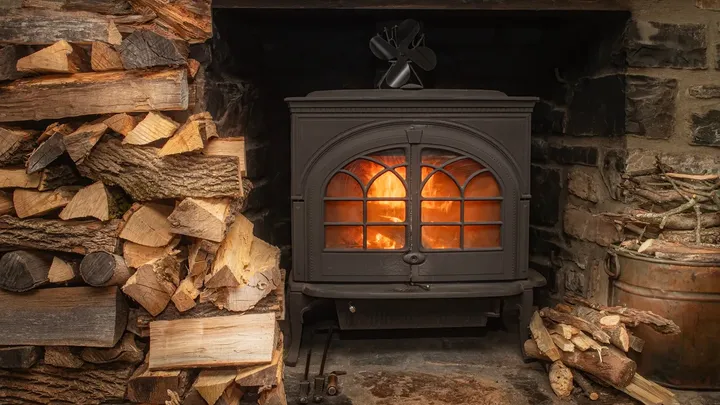
When the evenings get colder, many people want their wood burner to keep the house warm for as long as possible. One common trick is to close the air vent before going to bed, hoping the logs will burn more slowly and still be glowing in the morning.
But is that really a good idea? It might seem like a simple way to get more out of your firewood, yet the way you control the airflow can make a bigger difference than you think. And a small detail on your wood burner could help explain why.
Why your wood burner needs enough air
A wood fire needs oxygen to burn properly. When you reduce the air supply too much, the flames can weaken, leaving the wood to smoulder instead of burning efficiently.
That might make the logs last longer, but it comes with a downside. Incomplete combustion produces more smoke and harmful pollutants, while soot and other deposits can build up inside the chimney. Over time, these deposits can increase the risk of a chimney fire.
HETAS, the UK organisation that promotes safer and cleaner solid-fuel heating, advises against letting a wood burner smoulder by restricting its air supply.
Dutch environmental advice makes a similar point. Milieu Centraal recommends giving the fire enough air rather than smothering it. A clean-burning fire generally has steady yellow flames and produces very little visible smoke.
If your stove is producing dark smoke or its glass keeps turning black, it may be a sign that the wood isn't burning properly.
What a magnetic thermometer can tell you
You may have seen a small thermometer attached to the metal pipe above a wood burner. It measures the pipe's surface temperature, helping you see whether the stove is operating within its recommended range.
The coloured markings vary between models, but they usually indicate when the pipe is too cool, operating in a suitable range or getting too hot.
For example, Condar's instructions for its magnetic thermometer give an approximate recommended surface-temperature range of 110°C to 250°C for a single-wall stovepipe. Temperatures below that range can indicate incomplete combustion and a greater risk of deposits. Temperatures that are too high can mean the stove is overheating.
These figures aren't universal, so check the instructions for your own thermometer and stove.
There's another important detail: magnetic thermometers are designed for single-wall stovepipes. If your stove has double-wall or insulated pipe, you'll generally need a suitable probe thermometer instead, following the manufacturer's guidance.
Does making the logs last longer actually help?
Not necessarily. If you restrict the air too much, the fire may burn for longer without producing much useful heat. You could end up with a cooler room, more smoke and additional deposits in the flue.
It's also worth distinguishing between letting the remaining embers die down naturally and loading the stove with fresh logs before bed, then deliberately starving the fire of air to keep it going. The latter can encourage poor combustion.
Exactly how you should manage a fire overnight depends on your particular appliance. Follow the manufacturer's instructions for adjusting the air controls, adding fuel and shutting down the stove. Don't assume that every stove should be operated in the same way.
What to do before going to bed
Rather than relying on a nearly closed air vent to stretch your firewood, focus on burning it efficiently.
- Use dry, untreated wood. Wet wood produces more smoke and burns less efficiently.
- Keep the air supply clear. Don't block the room's ventilation openings, and adjust the stove's controls according to its instructions.
- Check the flue temperature. A suitable thermometer can help you spot when the stove is running too cool or too hot.
- Maintain your stove and chimney. Arrange regular chimney sweeping and keep a working carbon monoxide alarm in the appropriate location.
Closing the air vent might seem like an easy way to make your logs last until morning, but a fire that smoulders can create more smoke and fewer useful benefits. Giving your stove the right amount of air, using dry wood and following the manufacturer's guidance will help you heat your home more safely and efficiently.