
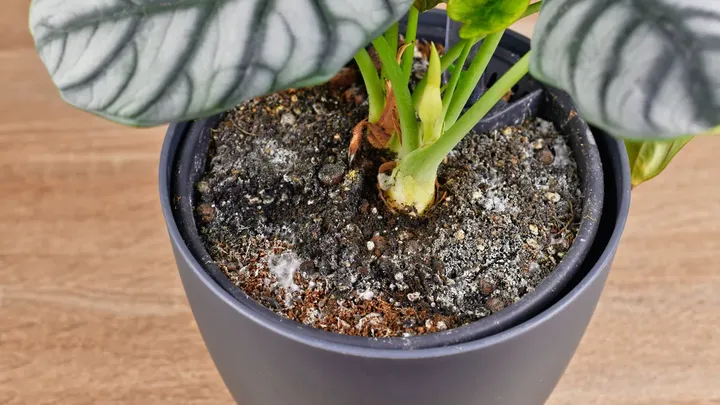
November is when the white layer often appears. The days are shorter, houseplants get less light, and the soil in their pots can stay damp much longer. Suddenly, there's a patch of white fluff on the surface, even though the plant itself looks perfectly healthy.
Gardening websites have been sharing an unusual kitchen remedy: a particular spice. But before reaching for the spice rack, there's something worth checking.
That white layer could be harmless fungus growing in damp soil. Or it could be a buildup of minerals from your tap water. They might look similar at first, but they need completely different treatments.
White and fluffy? It's probably a fungus
If the white layer looks soft, cottony, or slightly fuzzy, you're probably dealing with soil fungus.
According to Clemson Cooperative Extension, this type of growth is commonly caused by saprophytic fungi, or organisms that feed on dead and decaying material in the potting mix, rather than attacking the living plant.
The good news is that the white fungus itself is usually harmless.
However, it can tell you something important about how you're caring for your plant. Fungi thrive in damp conditions, especially when there's little airflow.
During winter, plants often use less water because they're receiving less light. If you continue watering as frequently as you did in summer, the soil may remain wet for too long.
How cinnamon can help with white mould
According to houseplant specialists at Patch Plants, you can start by carefully removing the visible mould with a clean spoon.
Avoid breathing in the spores, and dispose of the affected soil.
Once you've removed the fluff, there's a simple kitchen trick worth trying: sprinkle a little ground cinnamon over the surface.
Cinnamon contains compounds with antifungal properties, and some plant-care experts recommend it to discourage surface mould from returning. However, ordinary kitchen cinnamon isn't a proven cure for every fungal problem.
A light dusting is enough. There's no need to cover the entire pot with a thick layer.
More importantly, allow the top layer of soil to dry before watering again, according to your plant's needs. Make sure the pot has drainage holes and, where possible, give the plant brighter indirect light and better airflow.
If the mould repeatedly returns, consider replacing the potting mix.
Cinnamon may help with the visible problem, but changing your watering habits addresses the underlying cause. It won't cure root rot.
Hard and chalky? Your tap water could be responsible
What if the white layer isn't fluffy at all? If it feels hard, gritty, or crystalline, you're probably looking at mineral deposits rather than mould.
You might also notice a white ring around the edge of the pot, particularly if you're using terracotta.
The University of Maryland Extension explains that these deposits come from dissolved minerals in water or salts left behind by fertilizers. As water evaporates, those substances remain in the soil and gradually accumulate.
This is especially common if your home has hard tap water. Unlike harmless surface fungus, excessive salt buildup can eventually affect the roots. Possible warning signs include brown leaf tips, slow growth, and wilting.
How to remove the white mineral crust
Start by gently scraping away the visible deposits and a thin layer of affected soil.
If the pot has proper drainage, the next step is to flush the remaining salts out.
You can run several pot-volumes of clean, low-mineral water through the soil, allowing it to drain completely. Don't leave the pot standing in the collected water.
If deposits keep returning, consider using rainwater or another low-mineral water source, particularly for sensitive houseplants. Also check that you're not applying more fertilizer than recommended.
Plants with severe salt buildup or poor drainage may need fresh potting mix.
And here's the important distinction: cinnamon won't remove mineral deposits. No matter how much you sprinkle on the soil, it cannot dissolve the salts left behind by watering.
A quick check before reaching for the spice rack
The next time you notice something white on your houseplant soil, gently examine it with a clean spoon.
Soft, cottony growth usually points to fungus and damp conditions. A hard, crumbly crust is more likely to be mineral buildup.
Knowing the difference can save you from treating the wrong problem. Sometimes the answer is a little less water and better airflow. Other times, it's changing how you water and removing accumulated salts.
And sometimes, that jar of cinnamon really can stay in the kitchen.