
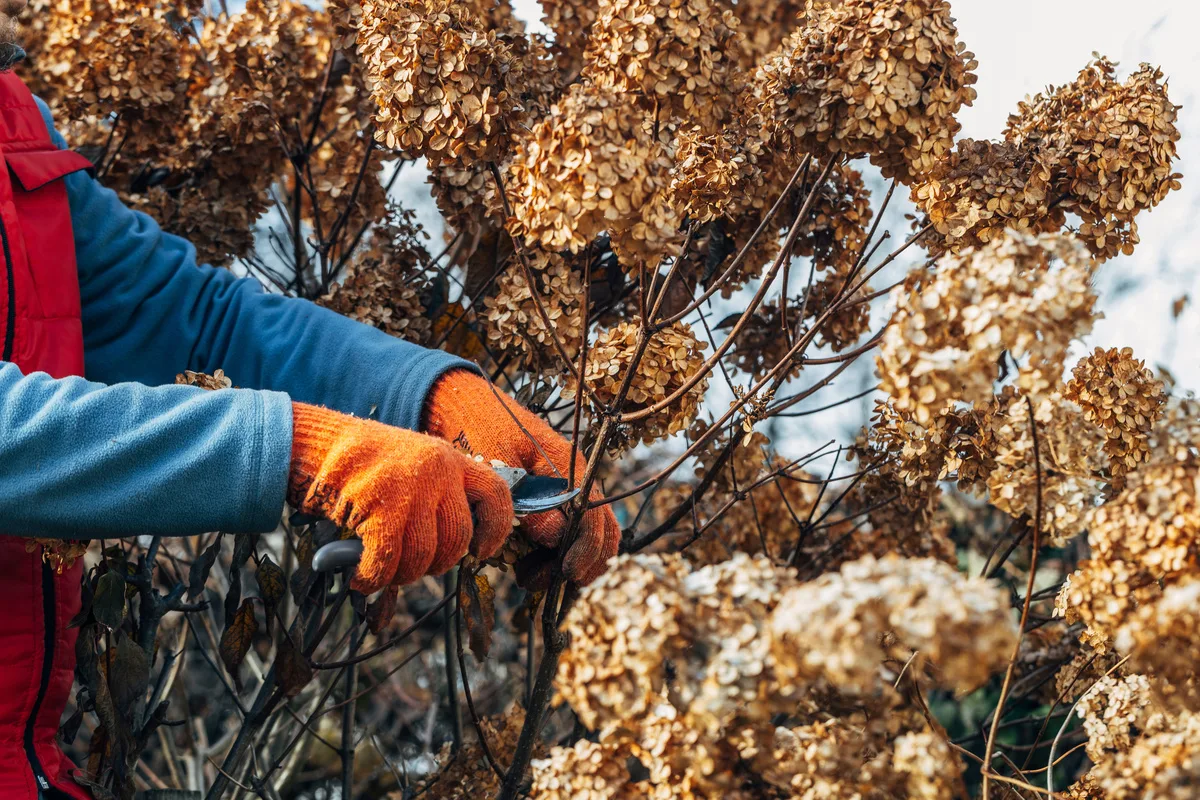
By late September, hydrangeas can look a little past their best. The once-bright flowers have turned brown and papery, and if you like a tidy garden, reaching for the shears can feel like the obvious next step.
But before you cut them off, take a closer look. Those dried-up flower heads may look like something the plant no longer needs, yet there is a good reason many gardeners leave them in place as winter approaches.
The important part is what is happening further down the stem and it could make a difference to how many flowers you get next summer.
The flowers may be protecting what comes next
For the familiar mophead hydrangea, the problem with autumn pruning is that the plant has already been preparing for next year's display.
Mopheads, along with lacecap hydrangeas, flower on older growth. The buds for the following year's flowers are already sitting on those stems, just below the faded flower heads. Cut too far back now and you can remove them before they ever get the chance to open.
The Royal Horticultural Society recommends leaving faded mophead flowers on the plant over winter. Besides adding some structure to the winter garden, the old heads help protect the tender growth buds below from frost.
That is why the brown, papery flowers can be worth putting up with for a few more months.
First, check which hydrangea you have
This is where things get slightly confusing, because not every hydrangea follows the same rules.
A mophead usually has a large, rounded flower head made up of many showy flowers. A lacecap has a flatter shape, with a ring of larger flowers around a cluster of tiny ones in the centre.
Both can flower on older stems, so heavy pruning is best avoided if you want to protect next year's flowers.
Then there are hydrangeas that work differently. Panicle hydrangeas have elongated, cone-shaped flower heads and produce their flowers on new growth. The same applies to the popular 'Annabelle' type, or Hydrangea arborescens.
So before picking up the shears, look at the shape of the flowers first. It can tell you a lot about when your plant should be pruned.
What should you do this autumn?
For a mophead, autumn is generally not the time for a major tidy-up.
Leave the faded flower heads in place through the winter and wait until late winter or spring. The exact timing depends on the weather, but the Royal Horticultural Society recommends removing old mophead flowers in early spring, cutting the stem back to the first strong, healthy pair of buds below the old flower head.
Gardeners' World similarly recommends waiting until the worst frosts have passed before removing the old heads.
You can still remove genuinely dead, damaged or broken wood in autumn. Just avoid turning the whole plant into a neat collection of short stems.
The exception: some hydrangeas can be cut back hard
If your plant has cone-shaped flower heads, you may have a panicle hydrangea rather than a mophead. These flower on new wood, so they can be pruned much harder in spring without removing next summer's flowers.
The Royal Horticultural Society recommends cutting last year's growth back to healthy buds in early spring. A low framework of around 25 cm is one option, while a taller framework of around 60 cm can be kept if you want a larger shrub.
The takeaway is simple: don't prune a hydrangea just because its flowers have turned brown.
Check the type first. If it is a mophead, those faded heads are doing more than simply making the plant look untidy, leaving them in place through winter can help protect the buds that will produce next year's flowers. Save the main pruning for the appropriate time in spring.