
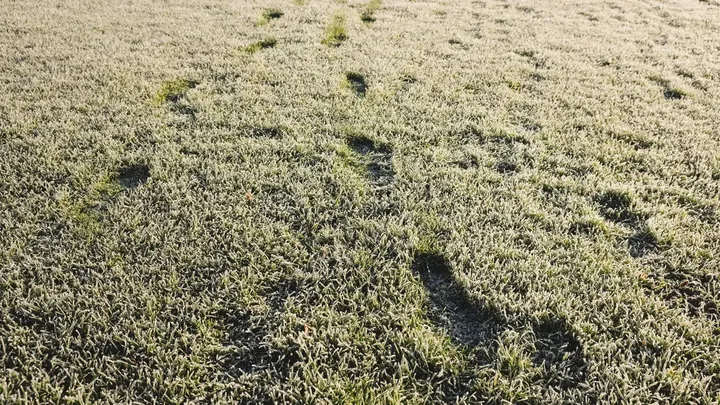
The first frosty morning of the season can make a garden look almost magical. The grass glitters in the early sunlight, the paths are quiet and everything seems perfectly still. It's tempting to walk straight across the lawn to fetch something from the shed, put out food for the birds or let the dog into the garden.
But that harmless-looking shortcut may have consequences that last long after the frost has disappeared. With colder nights approaching, it's worth knowing why lawn specialists recommend leaving the grass alone on frosty mornings, how to avoid unnecessary damage and what your lawn needs as winter sets in.
Why walking on frosty grass can leave marks
When temperatures drop below freezing, water inside and around grass blades can freeze into ice crystals. This makes the blades stiff and brittle, rather than flexible enough to bend under pressure.
Walking across the lawn can then crush or break the frozen blades. The damaged grass may initially look dark or almost black before turning brown as the affected tissue dries out.
Purdue University's winter lawn care advice recommends avoiding walking or driving over frosted turf for precisely this reason. Research published in the Michigan State University also explains how traffic on frozen grass can cause injury.
The important distinction is that the damage is usually concentrated in the leaves. The crowns and roots are generally less affected, which means the grass can recover when growing conditions improve.
How long does a frosty lawn take to recover?
Unfortunately, those marks may not disappear as soon as the frost melts. The damaged blades need time to grow out and be replaced by healthy new growth.
According to Purdue University, recovery can take several weeks in early autumn, and even longer later in the season as grass growth slows. The Royal Horticultural Society's lawn advice also recommends keeping off frosty lawns, noting that brown footprints can remain visible for weeks.
The exact recovery time depends on the weather, the type of grass and how much damage has occurred. A few footprints are unlikely to ruin an otherwise healthy lawn, but repeatedly walking along the same route can make the problem worse.
Other lawn mistakes to avoid this winter
Frost isn't the only thing to think about when preparing your lawn for colder weather. A few simple habits can help keep it in better condition:
- Avoid mowing frozen grass: Frozen blades are more vulnerable to damage, so wait until the lawn has thawed and conditions are suitable.
- Clear fallen leaves: A thick layer of leaves can block light and trap moisture, creating poor conditions for the grass underneath.
- Keep de-icing salt away: Salt used on nearby paths and driveways can damage grass if it gets onto the lawn.
- Avoid unnecessary traffic: Try not to use the same shortcut across the grass when the ground is frozen or waterlogged.
The RHS's November lawn advice also recommends adjusting lawn care to the conditions rather than treating winter like the normal growing season.
What about letting the dog outside?
You don't need to keep your dog indoors every time there's a frost. However, if your pet regularly runs across the same stretch of grass, repeated traffic can put extra pressure on an already vulnerable lawn.
If possible, use a paved path or encourage your dog to follow a designated route until the frost has melted. It may also help to avoid games that involve lots of running and turning on the grass first thing in the morning.
The simplest rule is to wait until the lawn has thawed before walking across it. That short delay could save you weeks of looking at the marks left behind.