
The heating has been on for a few weeks, but one radiator still isn't doing its job. The room feels chilly, even though the rest of the house is warming up. When you put your hand against the radiator, you notice that one half feels much warmer than the other.
It's tempting to turn up the thermostat or reach for the radiator key straight away. After all, bleeding a radiator is one of the first things many people try when their heating isn't working properly.
But before you do anything, it helps to know what the temperature difference is telling you. The same cold patch can have different causes, and choosing the wrong fix could leave you with a radiator that still struggles to heat the room.
Where your radiator stays cold matters
The first thing to do is check whether the cold area is at the top, at the bottom or across the entire radiator.
According to Worcester Bosch, a radiator that's hot at the top but cold at the bottom may have a build-up of sludge or a problem with water circulation.
A cold top, on the other hand, often points to trapped air. Air rises inside the radiator and can prevent hot water from reaching the upper section.
If the whole radiator stays cold, the problem could be a valve that's closed or stuck, or an issue affecting the circulation of hot water.
These signs aren't a guaranteed diagnosis, but they can help you work out what to check next.
The black sludge that can build up inside
Over time, corrosion inside steel radiators and pipes can produce deposits known as magnetite and other forms of iron oxide. These can mix with dirt and other debris circulating through the heating system.
The deposits can settle at the bottom of a radiator, where they may restrict the flow of hot water. As a result, the top can feel warm while a large section at the bottom remains cold.
As Stelrad explains, sludge can stop a radiator from heating efficiently. The build-up doesn't always affect every radiator equally, either. If water flows more slowly through one part of the system, deposits may accumulate there first.
A cooler bottom isn't always a bad sign
Don't panic if the bottom of your radiator feels slightly cooler than the top. Radiators release heat into the room as hot water passes through them, so some difference in temperature is normal.
What matters is how pronounced that difference is. If a substantial part of the radiator remains noticeably cold after the heating has been running for a while, it deserves a closer look.
What to check before calling an installer
Start with the simple things:
- Check the valves. Make sure the thermostatic radiator valve is set to allow heat and that the other valve hasn't been shut. Don't force a valve that seems stuck.
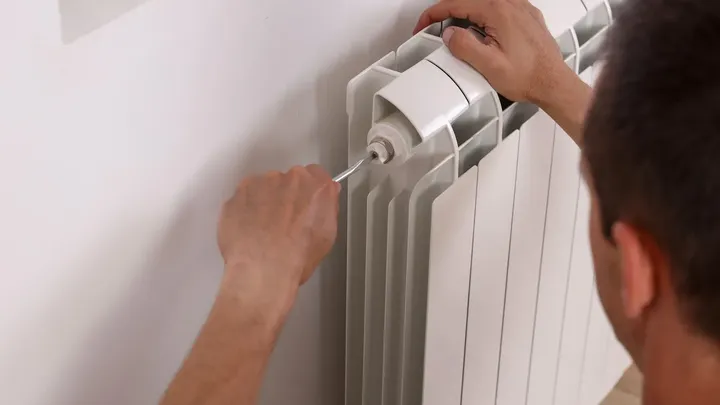
- Bleed the radiator if the top is cold. Switch off the heating and let the radiator cool first. Open the bleed valve gently with a radiator key. Once the hissing stops and water begins to emerge, close it again.
- Check the boiler pressure. Bleeding can lower the pressure in a sealed heating system. Check your boiler manual for the correct range and follow its instructions if the pressure needs adjusting.
Vaillant's radiator advice also recommends checking the valves and reassessing the radiator after bleeding.
When should you call a heating engineer?
If the bottom remains cold after these checks, sludge or restricted circulation could be to blame. A qualified heating installer can assess the radiator and decide whether it needs cleaning or whether the wider system requires flushing.
If several radiators have similar problems, mention that when you book the visit. The cause may lie in the heating system as a whole rather than in one radiator.
Here's what you should take away from this: Before turning up the thermostat or repeatedly bleeding a radiator, check where it stays cold. The temperature pattern can help point you towards the right fix, and if a large section remains cold, it's worth getting a professional diagnosis.