
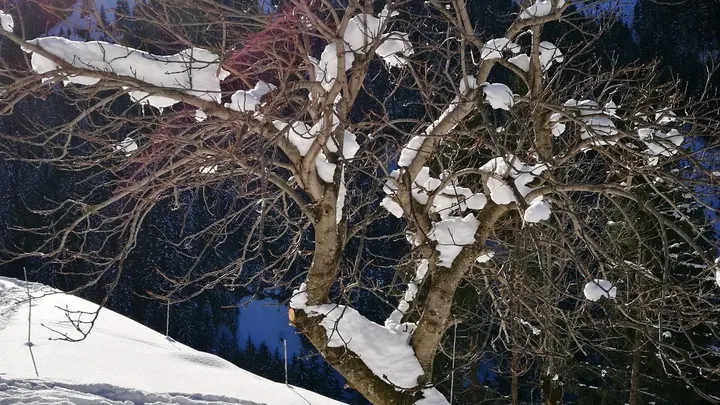
As soon as the last leaves fall, the branches are easy to see, and the pruning saw comes out of the shed. For an apple or pear tree, winter is usually a good time for pruning. But for a plum or cherry tree, November falls right in the risky period.
French newspaper Le Figaro recently highlighted why November pruning requires care. The important thing is knowing which trees can handle it and which should wait.
Apple and pear trees: winter is the right time
Apple and pear trees are generally pruned while dormant, between December and March. Once their leaves have fallen, it's easier to spot crossing branches, damaged wood, and areas where the crown has become overcrowded.
Dutch gardening specialist Koen in het Groen recommends winter pruning for both trees, preferably before the middle of March.
However, November doesn't mean you need to start immediately. Light maintenance is possible once the tree is dormant, while more extensive pruning can usually wait until later in winter.
Choose a dry, frost-free day and use clean, sharp tools. Avoid removing too many branches at once, particularly from older trees.
One important detail: apple trees aren't completely immune to silver leaf. The RHS also lists them among susceptible trees, although Dutch fruit-growing guidance generally considers them less vulnerable than plums and cherries.
Plum and cherry trees: leave them until summer
Plum and cherry trees need different treatment. Both belong to the stone-fruit family and are particularly vulnerable to silver leaf infections, caused by a fungus known as Chondrostereum purpureum.
According to Britain's Royal Horticultural Society (RHS), the fungus produces infectious spores from September to May. Its name comes from the unusual silver-gray sheen that appears on infected leaves, often during the following summer.
The fungus releases spores mainly during damp autumn and winter weather. When these spores land on fresh pruning cuts, they can enter the wood and gradually damage the branches.
That's why the RHS recommends summer pruning for susceptible trees. There are fewer infectious spores in the air, and pruning wounds heal more quickly.
The same advice generally applies to:
- Plum and damson trees
- Sweet and sour cherries
- Ornamental cherry trees
- Apricots and almonds
- Peaches and nectarines
For established trees, pruning during summer, often around or shortly after harvest, is generally recommended. Young trees may need different spring training, depending on the species.
Dutch fruit-growing website Hoogstamfruit also identifies the plum varieties Opal and Reine Victoria as especially susceptible to silver leaf.
Cherries face another problem: winter pruning can increase their vulnerability to bacterial canker.
Birch and maple trees have another problem
Some trees aren't especially known for silver leaf, but they can lose considerable amounts of sap when pruned at the wrong time.
This is called bleeding. It happens when sap flows from freshly cut branches, particularly as growth resumes.
According to the RHS, birch trees should ideally be left unpruned. If pruning is necessary, late summer through midwinter is the preferred window.
Japanese maples can generally be pruned after their leaves fall but before January.
Walnut and magnolia trees are better pruned in late summer or early autumn.
Although bleeding can look alarming, it doesn't necessarily mean a healthy tree is dying.
Already pruned your plum tree? Here's what to do
If you've already pruned a plum or cherry this autumn, don't panic. A fresh cut doesn't automatically mean the tree will become infected.
Keep an eye on its leaves next summer. A silvery appearance, dying branches or dark staining inside the wood can indicate silver leaf.
If infection is confirmed, the RHS recommends removing affected branches promptly, cutting back into healthy wood and disinfecting tools regularly. Remove infected material from the garden rather than composting it.
Painting pruning cuts isn't routinely recommended, although the RHS notes that protective treatments may be considered where silver leaf repeatedly causes problems.
For now, the easiest rule is this: save apple and pear pruning for the dormant winter months, leave plum and cherry trees until their appropriate warmer-season window, and check the timing before cutting trees that bleed sap.