
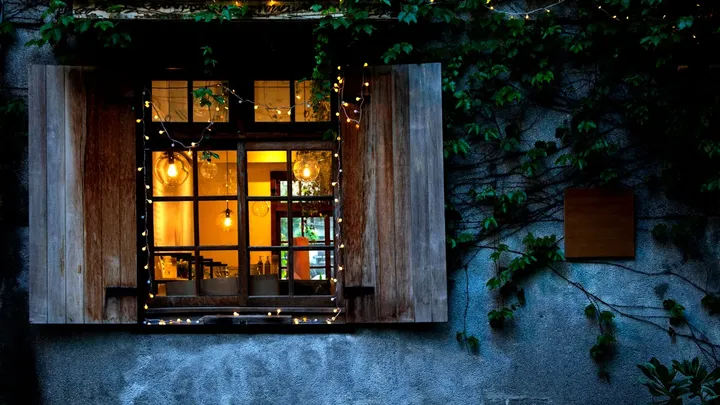
Christmas lights look lovely wrapped around the porch railing. You've used the same string on your indoor tree for years, so why buy another? Then, with the first heavy shower, the lights go out, and suddenly, your house has no electricity.
This is a problem that can happen when indoor Christmas lights are used outside. Moisture gets into electrical connections, triggering a safety device that cuts the power.
However, the above scenario can be prevented. The clue is often on the original packaging. A small code tells you how well the lights are protected against water. Checking it before decorating could save you an unpleasant surprise.
But first, how can Christmas lights cause blackouts?
Why rain can suddenly cut your electricity
Water can find its way into a damaged light socket, connector, or plug, allowing electricity to travel somewhere it shouldn't.
In American homes, a ground-fault circuit interrupter, or GFCI, is designed to detect this problem. It compares the current flowing into electrical equipment with the current returning. When it detects a small difference, it quickly shuts off the electricity to reduce the risk of electric shock.
Depending on your wiring, this might affect just the outdoor outlet or several outlets on the same circuit. If the power trips during rain, don't assume the safety device is faulty. It may be warning you about a dangerous electrical problem.
What do IP20, IP44, and IP65 actually mean?
IP stands for Ingress Protection. The first number describes protection against solid objects, including dust. The second tells you how well the product resists water.
Here's what to look for:
- IP20: No water protection. Common on indoor lighting and unsuitable for outdoor use.
- IP44: Protected against splashing water from any direction. Often suitable for ordinary outdoor Christmas decorations.
- IP65: Dust-tight and protected against water jets. A stronger choice for exposed railings, fences and garden trees.
An IP44 string may be perfectly suitable beneath a covered porch, provided the manufacturer approves that use. But if your decorations will face driving rain throughout November and December, IP65 offers greater protection.
Neither rating means you can leave electrical connections submerged in water. Always follow the instructions supplied with the lights.
The other mistake people make with outdoor lights
Buying outdoor-rated Christmas lights doesn't automatically make the entire setup weatherproof. The string itself might handle rain perfectly well, while the plug, extension cord, or power adapter cannot.
Experts recommend keeping plugs and transformers indoors wherever possible, even when the lights themselves are suitable for outdoor use.
If connections must remain outside, every component needs to be specifically rated for those conditions.
For American households, electricians also recommend plugging outdoor decorations into GFCI-protected circuits.
Lower-voltage LED lighting is another worthwhile option. Sets using a properly designed safety transformer can substantially reduce the risk of electric shock.
Five checks before hanging your Christmas lights
Before getting the ladder out, spend a few minutes checking your decorations.
- Read the label. Make sure the lights are specifically approved for outdoor use, with an appropriate water-resistance rating.
- Inspect the wires. Replace strings with cracked insulation, exposed wires, or damaged connections.
- Check the plugs. Keep adapters dry and use only extension cords and connection enclosures rated for outdoor conditions.
- Check GFCI protection. Use a protected circuit and follow the manufacturer's instructions for testing the device.
- Choose a safe position. Secure lights against wind and keep cords away from standing water, sharp edges, and busy walkways.
A timer can also help reduce unnecessary electricity use, while LED strings generally consume much less power than older incandescent lights.
What if your Christmas lights have already tripped the power?
Leave the lights switched off. If everything is dry and safely accessible, disconnect the decorations before considering a reset.
Never touch a wet plug, open an electrical outlet, or repeatedly reset a device that keeps tripping.
If the problem continues after the decorations have been disconnected, contact a qualified electrician.
And before reusing the lights, check whether they're actually suitable for outdoor conditions.
The simplest precaution is the easiest to overlook: read those two numbers after IP before hanging anything outside.