
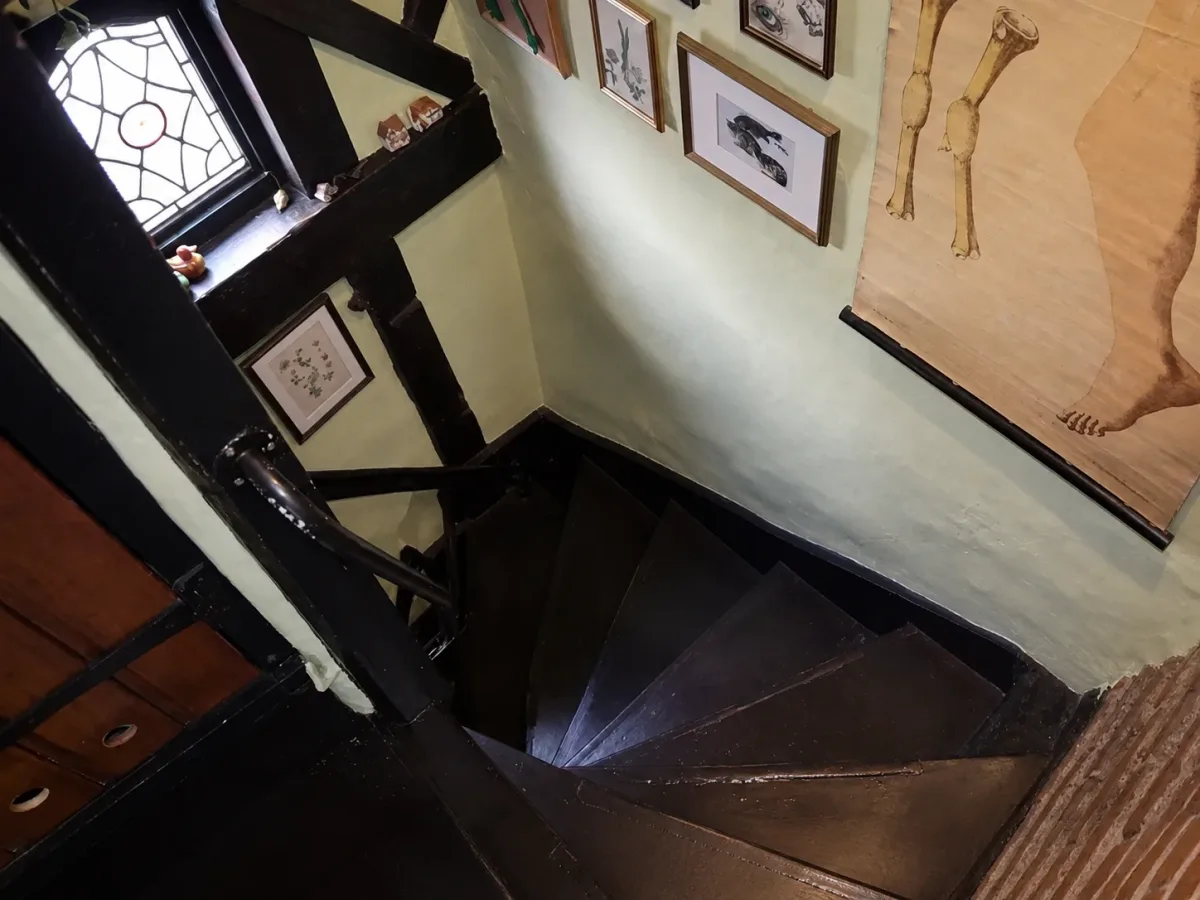
The Stairs and Landing
Getting upstairs is a reminder that this house predates modern measurements. The staircase and upper passage fit around old timbers, low sections, and walls that have shifted over centuries. There is no grand hallway. You move through the cottage almost one piece at a time, which makes the upper floor feel connected to the structure itself.
Amy has not tried to hide those awkward transitions. Dark beams stay visible. Old doors and uneven edges are allowed to look old. Small pictures, objects, and furniture turn passing spaces into places worth noticing. In a newer home, a landing might simply connect one room to another. Here, the route becomes part of the tour because you can see how generations adapted the original building rather than starting again.
That is where the cottage’s history becomes easy to imagine. The house began as a medieval hall house, then changed substantially over time. Floors, partitions, and rooms were added as people wanted more privacy and different ways of living. Walking upstairs means moving through those later decisions. Amy’s renovation adds another layer, but a gentle one. She makes the space comfortable while leaving enough evidence for the building to keep telling its own story.