
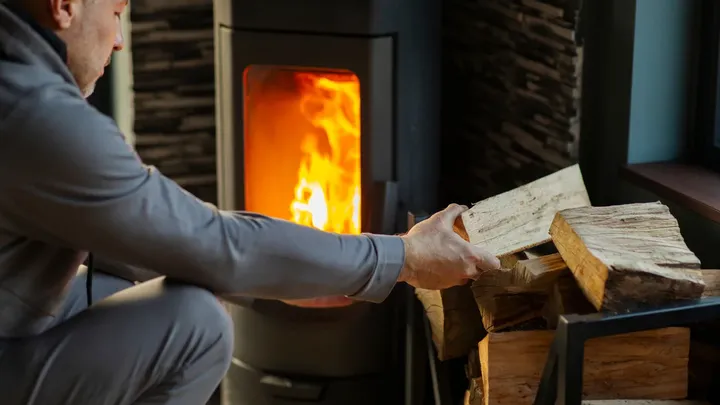
As the evenings get colder, plenty of households are getting their wood burners going again. For many people, lighting one is almost automatic: a little paper at the bottom, some kindling on top and a few logs to finish the stack. It's probably the same method they've used for years, without giving it much thought.
But environmental experts say there's a reason to rethink this familiar routine. The first few minutes after lighting a fire can produce a surprisingly large share of its polluting emissions. According to Belgian health website gezondheid.be, around 80% of these emissions occur during the first 10 to 15 minutes after lighting and when adding more wood.
With wood smoke becoming an increasing concern in several European countries, even prompting some Dutch municipalities to offer financial help to residents who remove their stoves, the advice is worth paying attention to. And it turns out that a small change to an old habit could make a difference.
The alternative way to light a wood burner
The method is known as top-down lighting, or the Swiss method. Instead of starting the fire underneath the logs, you build the stack the other way around: the largest pieces of wood go at the bottom, smaller pieces sit above them, and the firelighter goes right at the top.
A 2018 study published in Biomass and Bioenergy compared the two methods in a wood-burning stove. Top-down ignition reduced total suspended particle emissions by about a third and unburnt gas emissions by half in the tested appliance. The researchers also found that some emissions, including elemental carbon, increased. So it isn't a guarantee of lower emissions for every pollutant or every stove.
How to use the Swiss method
Dutch environmental service OZHZ recommends placing the most flammable material at the top and lighting the fire from above. Stove specialist De Heide Smid describes the process:
- Put the larger logs at the bottom. Arrange a few split logs in the firebox, leaving space between them for air to circulate.
- Add smaller pieces of wood. Stack medium-sized logs crosswise above the larger ones, followed by dry kindling.
- Place the firelighter on top. Use one or two suitable firelighters among the smallest pieces of kindling.
- Check the air controls. Set them to the lighting position specified in your stove's manual. Different models have different air systems.
- Light the top layer. Let the flames gradually work their way down through the stack. Keep the stove door in the position recommended by its manufacturer.
Dry wood still matters
Even the best lighting technique won't compensate for damp firewood. The US Environmental Protection Agency recommends burning wood with a moisture content below 20%. Wet logs are harder to ignite and produce more smoke.
OZHZ also warns against closing the air supply to smother a fire. This causes incomplete combustion and can release additional harmful substances, including carbon monoxide. Keep ventilation openings clear while the stove is burning, and never restrict the air supply simply to make the fire last longer.
Check the conditions before lighting up
The Dutch Stookwijzer advises against burning wood when weather conditions mean smoke is likely to linger. Its orange and red codes indicate that residents should avoid lighting their stoves.
Nijmegen has also introduced a scheme offering residents up to €1,000 towards removing a wood burner or fireplace and permanently closing or removing its flue. The 2026 scheme runs until 15 December, subject to the available budget. You can find the official conditions here.
Lighting from the top can help reduce certain emissions during start-up, but it doesn't make wood burning harmless. Dry fuel, sufficient ventilation, a well-maintained stove and checking local air-quality advice remain just as important.