
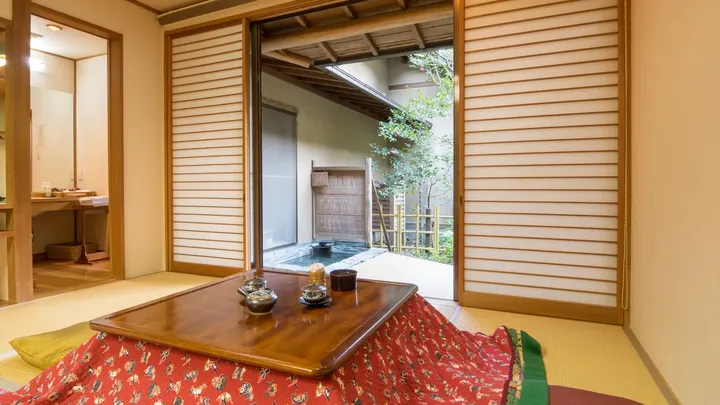
In many Japanese homes, winter evenings revolve around an unusual piece of furniture. Families sit around a low table, slip their legs beneath a thick quilt, and enjoy the warmth of a heater fitted underneath. It's called a kotatsu, and the idea behind it is surprisingly practical.
Instead of heating an entire room, a kotatsu concentrates warmth around the people sitting at the table. Many models use 300-600 watts, considerably less than a typical 1,500-watt portable electric heater.
But there's more to this Japanese tradition than a cozy place to sit. Energy advisers in Europe recommend a similar approach to keeping warm, and it could help reduce your heating bill this winter.
How a Japanese kotatsu keeps people warm
A kotatsu looks like an ordinary low coffee table, except for the thick blanket hanging beneath its tabletop. An electric heating element is attached underneath, while the quilt traps much of the warmth around everyone's legs.
The design has a long history. Earlier versions used charcoal for heat, but modern kotatsu tables run on electricity.
Japanese manufacturers list several heater models rated at 300, 500, or 600 watts. Actual electricity consumption depends on the temperature setting and how often the heating element switches on.
That makes a kotatsu different from an ordinary space heater. Rather than warming all the air in a living room, it provides warmth in a much smaller enclosed space.
European energy experts recommend a similar trick
You don't need Japanese furniture to copy the principle.
The idea isn't limited to Japan. The US Department of Energy recommends wearing extra layers and using blankets indoors to stay comfortable while lowering the thermostat. It's the same basic principle behind the kotatsu: keep people warm without heating the entire house more than necessary.
The Dutch energy advice organization Milieu Centraal recommends warming yourself with an electric blanket or heated seat cushion instead of constantly turning up the central heating.
These products can use remarkably little electricity. A heated blanket or cushion rated at around 30 watts costs approximately one euro cent per hour to operate, using its stated electricity-price assumptions.
At that rate, eight hours of warmth would cost roughly eight cents. Your actual cost depends on your electricity tariff and the appliance's power consumption.
It's an appealing alternative for anyone who spends winter evenings sitting on the sofa, reading or watching television.
The catch: Your thermostat needs to go down
Here's where the potential savings really come from. If your central heating stays at its usual temperature while you switch on an electric blanket, you're simply adding another appliance to your electricity bill. The benefit comes when that personal warmth allows you to turn down the thermostat.
British energy experts make a similar point. According to the Energy Saving Trust, lowering a thermostat from 22°C to 21°C could save around £120 a year in Great Britain. That's where a heated throw or cushion might help: making a slightly cooler room feel comfortable without increasing the central heating.
Milieu Centraal recommends keeping the thermostat at no more than 19°C (66°F) while at home, where comfortable and appropriate. Its example calculations suggest this can save around €170 ($190) annually, although the amount varies considerably with the property, heating system and existing thermostat setting.
A heated throw could make a cooler living room more comfortable, allowing you to use less energy for whole-house heating.
How to bring the Japanese idea into your living room
The easiest option is already familiar: a thick blanket over your knees, warm socks and a comfortable sweater.
For extra warmth, consider a purpose-made electric heated throw or seat cushion with temperature controls and an automatic shut-off function.
Never try to build your own kotatsu by putting an ordinary portable heater beneath a blanket-covered table. That creates a serious fire risk.
Electrical Safety First advises checking heated blankets for damaged wires, scorch marks and worn fabric. Always follow the manufacturer's instructions, and never use an electric blanket folded or heavily creased.
The lesson from Japan isn't necessarily to buy another piece of furniture. It's to rethink what needs heating.
If you're spending the evening in one spot, keeping yourself comfortably warm may be cheaper than keeping every corner of the house equally warm.