
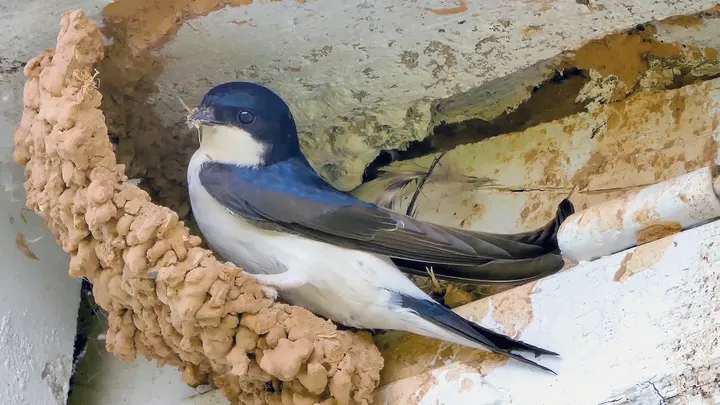
The swallows or house martins have flown south for winter, leaving behind little mud nests tucked beneath the roof. For homeowners, autumn can seem like the perfect time to remove them, especially when the gutters need cleaning or the house is being painted.
But those empty nests might be needed again next spring. Bird charities warn that removing them can make life harder for returning house martins. Depending on where you live, there may also be legal restrictions.
Fortunately, there's a simple way to deal with the mess without disturbing the nests.
Why house martins return to their old nests
House martins spend the winter in Africa before returning to Europe in spring. Unlike many garden birds, they often come back to the same nesting sites, sometimes using exactly the same nest.
According to the Royal Society for the Protection of Birds (RSPB), house martins build their nests from hundreds of tiny pellets of mud. It's painstaking work, so finding an intact nest when they return saves considerable effort.
The British Trust for Ornithology recommends leaving old nests in place over winter. Birds that reuse existing nests may also have a better chance of raising two broods during the breeding season.
An empty nest doesn't necessarily mean its usefulness has ended. Other small birds may even use old nests for shelter during colder weather.
Can you legally remove house martin nests in the UK?
In the UK, wild birds and their nests are protected by law while the nests are being built or used.
Under the Wildlife and Countryside Act 1981, intentionally damaging or destroying an active wild bird's nest is an offence. The RSPB advises homeowners to postpone building work that would disturb nesting birds until their young have left.
However, the rules are different for genuinely unused house martin nests. In general, these do not receive the same protection outside the breeding season.
That doesn't mean removing them is a good idea. House martins returning to a bare wall must start building again, using valuable time and energy.
Before arranging painting, roofing or gutter work, check whether any nests are active. Don't assume they've been abandoned simply because it's autumn.
In the Netherlands, the rules can be stricter
Dutch homeowners should be particularly careful. House martins are protected under the country's Omgevingswet, which implements European bird protection requirements.
According to Vogelbescherming Nederland, nests are protected during the breeding season. Outside that period, the situation depends on ecological circumstances and provincial rules.
Some provinces also protect house martin nests throughout the year, because these birds repeatedly return to established nesting colonies.
That means removing an apparently empty nest could require an environmental permit. Homeowners should check their province's rules before starting work.
The simple plank trick that prevents the mess
One of the biggest complaints about house martin nests is the droppings that collect on windowsills, paths and doorsteps.
But removing the nest isn't the only solution.
Installing a small wooden dropping board about 50 centimetres below the nest can be one way. The board will catch most of the droppings before they reach the area underneath. Leave approximately 3 centimetres between the board and the wall. This helps prevent the birds from building another nest underneath it.
A removable board also makes cleaning easier. Wear gloves when removing accumulated droppings, and avoid disturbing any nesting birds.
What to do before your next maintenance job
If you're planning autumn work around your gutters or eaves, show the contractor where the nests are and ask them to leave those areas undisturbed.
If repairs genuinely require nest removal, check the relevant legal requirements first and consider getting advice from a local bird conservation organisation.
Keeping the old nests and placing a small board beneath them is often the easiest answer. Your windowsills stay cleaner, and the returning house martins still have somewhere familiar to raise their next family.