
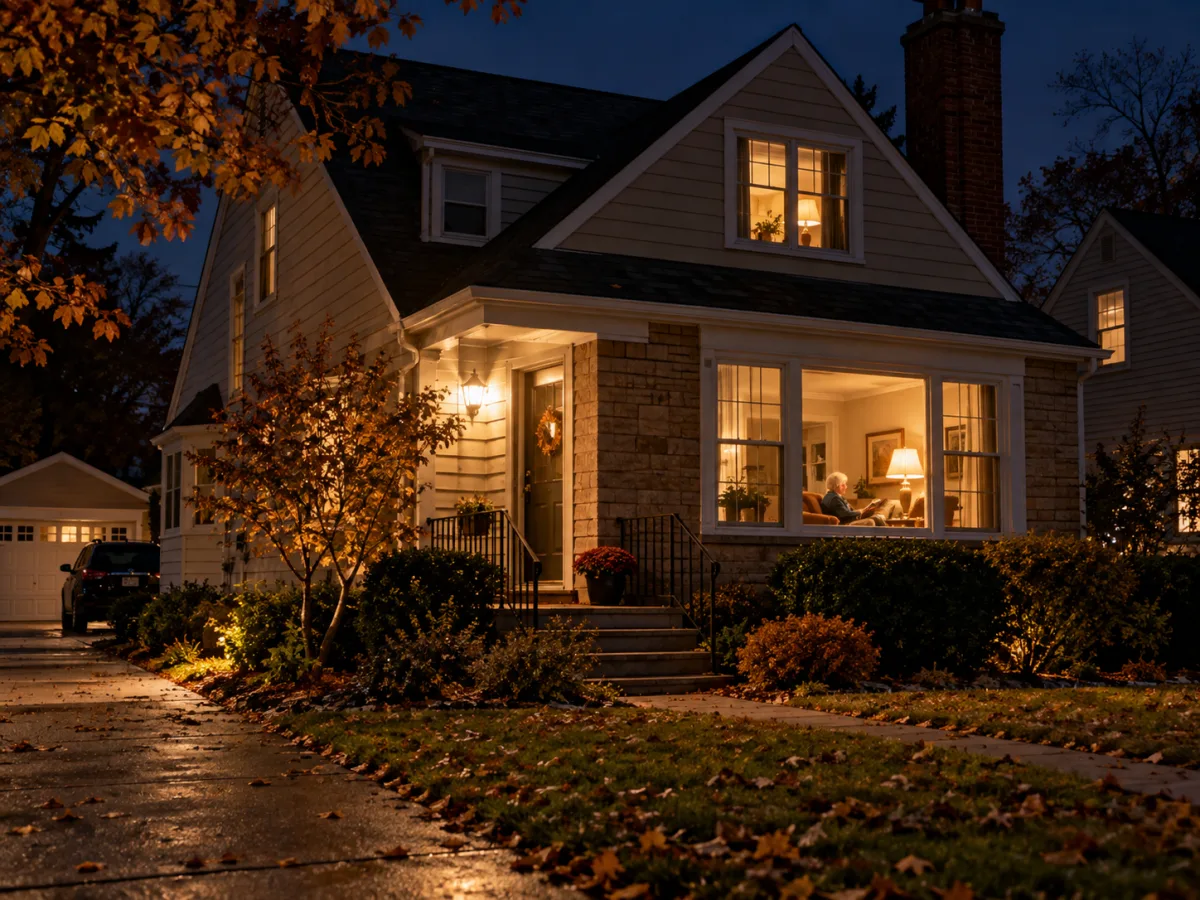
1. Stop making your lighting completely predictable
The first habit sounds almost backwards: do not rely on one porch light burning in the same way every night. A permanently glowing exterior light can feel reassuring, if your eyesight is not as sharp as it once was. However, an unchanging light can become part of a pattern. It may illuminate the entrance without suggesting that someone inside is awake and paying attention.
A more convincing impression of an occupied home comes from normal-looking changes. Turn the porch light on when you would genuinely use it, and let different rooms become visible at different times. Timers or smart plugs can help, but the principle is simpler than the technology: a lived-in house changes during the evening. One room grows dark, another lights up, and the house does not look frozen in one setting for hours.
For older homeowners, safety always comes first. Keep any light you need for steps, paths, and doorways. Preventing a fall is equally important. The lesson is to separate useful safety lighting from a predictable signal. Your home should look safely illuminated, but also as though people are moving through an evening inside.