
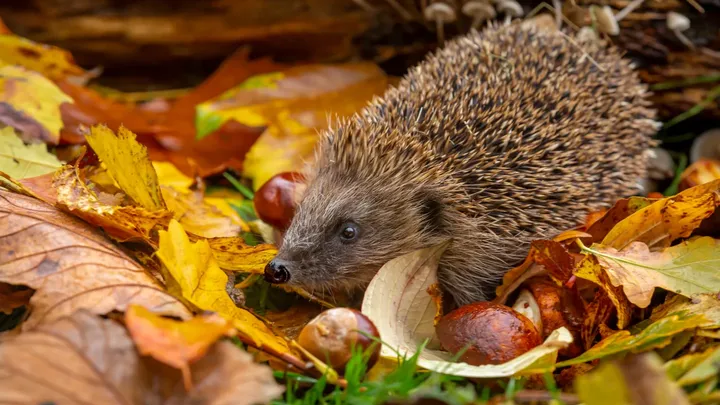
Most hedgehogs are preparing for their winter sleep by November. But you might still spot a small one wandering through your garden in the evening, sniffing around fallen leaves or searching for something to eat.
It could be a young hedgehog born late in the season, struggling to build enough fat to survive the colder months. According to wildlife rescue organisations, its weight can tell you a lot about whether it needs help.
But there's something else worth knowing. Two foods people have traditionally left out for hedgehogs can actually do more harm than good.
Why some hedgehogs are still awake in November
Hedgehogs rely on stored body fat to survive hibernation. While many adults settle down during autumn, younger hedgehogs may remain active well into winter.
According to Egelbescherming Nederland, young hedgehogs often struggle to build sufficient fat reserves. Some continue searching for food into December or even January.
This doesn't automatically mean they're in trouble. A healthy hedgehog moving around after dark may simply be looking for another meal.
However, one that's unusually small, weak or wandering around during daylight could need urgent attention.
How much should a hedgehog weigh before winter?
This is where the advice becomes interesting, because rescue organisations don't all use the same figure.
The British Hedgehog Preservation Society considers 450 grams (approximately 1 pound) the absolute minimum for surviving hibernation.
It advises seeking professional guidance for young hedgehogs weighing less than this between late October and February. Those under 250 grams in autumn may be orphaned and need immediate assistance.
Rescue centres generally prefer rehabilitated hedgehogs to weigh at least 600 grams before release.
Meanwhile, Dierenbescherming recommends a minimum of 750 grams during autumn and winter.
The important distinction is that weight alone doesn't determine whether a hedgehog should be rescued. Its behaviour, physical condition, the weather and the time of year all matter.
How to tell whether a hedgehog needs help
If you're concerned about a small hedgehog visiting your garden, contact a wildlife rescue centre for advice before handling it.
Rescuers may ask for its weight, a photograph and details about its behaviour. If weighing is appropriate, they can explain how to do it safely using a suitable container and kitchen scales.
Watch for warning signs such as:
- Wandering around during daylight in autumn or winter
- Appearing weak, wobbly or unusually thin
- Having closed or dirty eyes
- Lying exposed without a proper nest
- Having flies gathering around its body
A healthy hedgehog searching for food at night is usually best left undisturbed.
Never give a hedgehog milk or bread
For generations, people have pictured hedgehogs drinking milk from a saucer. Unfortunately, it's one of the worst things you can offer them.
Hedgehogs cannot properly digest the lactose in ordinary milk. It can cause diarrhoea and dehydration. Bread is also unsuitable because it provides little useful nutrition.
Instead, the British Hedgehog Preservation Society recommends meaty cat or dog food, suitable hedgehog food or dry cat biscuits.
Always provide a shallow bowl of fresh water.
Avoid regularly feeding mealworms, too. They can contribute to nutritional imbalances, particularly when offered in large quantities.
Keep feeding areas clean and place food somewhere sheltered.
Who should you call if you're worried?
If you live in the United States, you're unlikely to encounter a wild hedgehog in your backyard. Unlike in Europe, hedgehogs aren't native to North America, and there are no established wild populations in the country. Hedgehogs in the US are mainly exotic pets, usually African pygmy hedgehogs. These animals have different care requirements from wild European hedgehogs and shouldn't be allowed to hibernate outdoors.
If you do find a hedgehog outside in the US, it may be an escaped or abandoned pet. Contact a local exotic-animal rescue or veterinarian rather than leaving it outdoors. The Hedgehog Welfare Society maintains a list of rescue contacts across the country.
In the Netherlands, contact a local hedgehog rescue centre, Egelbescherming Nederland on 06-188 19 576, or the animal emergency number 144.
In Britain, the British Hedgehog Preservation Society can help locate a rescue centre on 01584 890801.
In Belgium, contact an approved wildlife rescue centre through Vogelbescherming Vlaanderen.
Remember, a hedgehog visiting your garden in November isn't necessarily in danger. Sometimes a little extra food and fresh water are all it needs. But if something seems wrong, calling a wildlife rescue centre could make all the difference.