
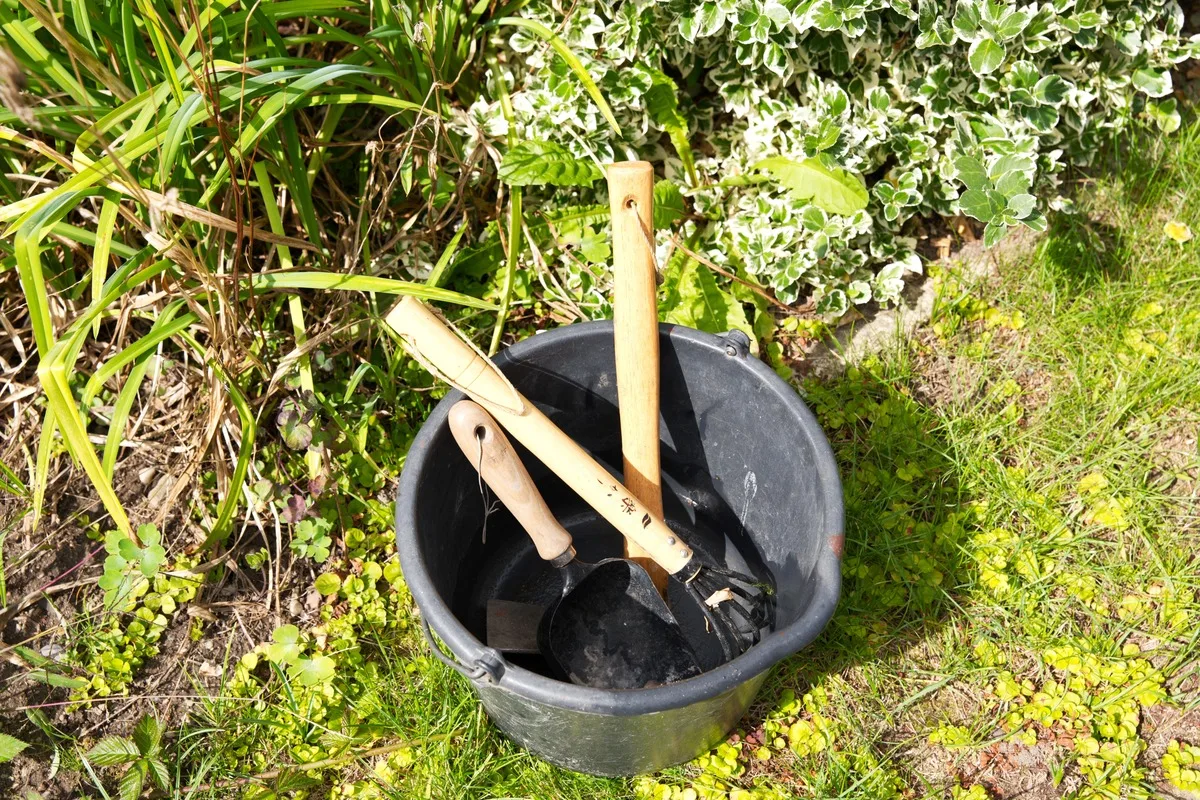
By the time the gardening season winds down, the tools have usually seen better days. Soil is stuck to the spade, the fork has picked up a few rusty patches and the secateurs are coated in sap.
Most of us would give everything a quick wash, leave it to dry and put it away until spring. But there’s an old garden-shed trick that takes a slightly different approach and it involves something you probably already have in the shed.
It sounds almost too simple, but gardeners have been using the method as a quick way to look after their tools before putting them away for the winter.
The surprisingly simple thing gardeners put in the bucket
That material is coarse sand. The old method combines sand with a small amount of oil. As you push a spade, fork or other metal tool into the mixture and move it around, the sand helps loosen soil and light surface rust. The oil leaves a thin coating over the metal.
According to The Prepared, the method can be traced to gardener and author Steve Solomon’s book Gardening When It Counts.
It isn't meant to remove years of heavy rust. Think of it as simple maintenance that helps keep everyday dirt from building up.
How to make the bucket
You don't need anything fancy. A sturdy 5-gallon bucket, or roughly 19 litres, will do.
Oregon State University Extension suggests filling it about four-fifths full with sand and mixing in roughly 1 quart, or 0.95 litres, of oil.
Other versions use less oil, so there isn't one magic measurement. The sand should stay loose and only lightly coated rather than turning into a greasy paste.
Use coarse sand rather than fine play sand, and mix it where you plan to keep the bucket. It gets heavy quickly.
Before putting a tool in, knock off loose soil. For dried-on dirt, use a wire brush first. Then push the metal end into the sand several times, moving it back and forth.
Pull it out and knock off the excess. You want a light oily film, not a dripping tool.
Which oil should you use?
This is where the advice varies. Some extension services mention motor oil as an inexpensive option. But if your tools are used in a vegetable garden, Garden Design advises avoiding petroleum products such as motor oil because residues can be carried into the soil.
Plant-based oils are another option. The Prepared uses mineral oil because it doesn't go rancid.
Whichever product you choose, make sure it is suitable for how you intend to use the tools. You only need enough to leave a light coating.
If you use linseed oil, don't leave oil-soaked rags crumpled up in the shed. The National Park Service has documented fires involving linseed-oil-soaked rags. Let them dry safely and follow the disposal instructions on the product.
Give the rest of your tools some attention
The sand bucket is best suited to sturdy tools such as spades, shovels, hoes and garden forks. Because sand is abrasive, it can scratch smooth finishes and wear away paint.
Pruners and shears are better treated separately. Remove built-up sap and dirt, disinfect them if needed, dry them thoroughly and apply a little oil before storage.
The wooden handles deserve attention too. Sand away rough patches or splinters, then apply a suitable wood oil.
And before everything disappears into the shed, sharpen any blades or digging edges that need it.
It’s an old-fashioned routine, but a useful one: a bucket of sand and a little oil can combine cleaning and light rust protection in one simple step, leaving you with less work to do when spring arrives.