
It usually shows up in November: a gray shadow on the bedroom wall, wallpaper lifting in a corner, or black specks behind the wardrobe.
The first question is where the water comes from. Moisture in the room air needs a different solution from rain entering through brickwork or damp rising from the ground.
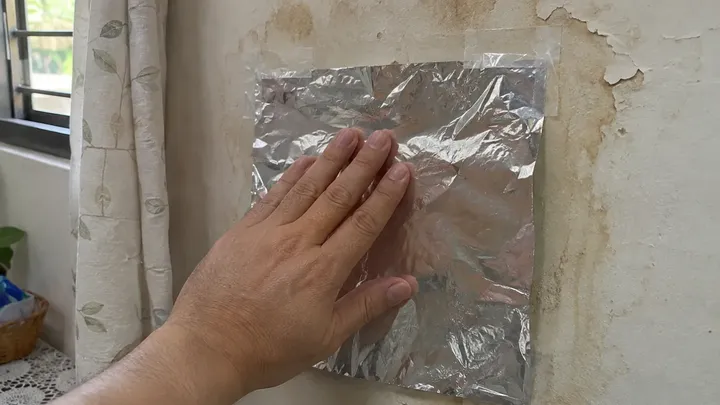
A simple household test could help you figure out where to look. All you need is aluminum foil, tape, and 48 hours of patience.
How to test a damp wall with aluminum foil
The method, recently highlighted by Homedit, works by separating moisture in the room from moisture moving through the wall.
Here's how to try it:
- Dry the surface. Gently wipe away any visible moisture with a clean, dry cloth.
- Cut a square of foil. Make it approximately 12 by 12 inches, or large enough to cover the affected area.
- Tape it to the wall. Press the foil flat and seal all four edges tightly so air cannot get underneath.
- Wait 24 to 48 hours. Leave the foil undisturbed while using the room normally.
- Check both sides. Carefully remove the foil and look for moisture on either surface.
Clear plastic sheeting can also work, particularly on bare concrete. Avoid placing foil over electrical outlets or switches.
What the wet side of the foil tells you
The important detail isn't simply whether the foil becomes wet. It's where the water collects.
Water on the room-facing side: This suggests condensation. Warm, humid indoor air is meeting a cooler surface and turning into droplets.
Water between the foil and the wall: This suggests moisture is moving through the wall material. Possible causes include rainwater penetration, groundwater moisture, or a hidden plumbing leak.
Both sides are wet: You may have more than one moisture problem.
Both sides remain dry: No significant moisture accumulated during the test. However, that doesn't necessarily mean the problem has disappeared.
These results are useful clues, not a definitive diagnosis. Different wall finishes and changing weather conditions can affect the outcome.
Look at where the damp patch appears
The foil test becomes more useful when you consider the location of the stain.
A damp patch near the floor, particularly one accompanied by peeling paint or white, powdery salt deposits, can suggest rising damp.
Moisture appearing higher up an exterior wall, especially after heavy rain, may indicate water entering through damaged masonry, window frames, or roofing.
Black spots in cold corners or behind large furniture are more commonly associated with condensation.
The UK's Property Care Association explains that these different moisture problems require different investigations and treatments.
Pay attention to the weather, too. A stain that grows after wind-driven rain deserves a closer inspection of the building's exterior.
What should you do after the test?
If condensation seems likely, start with better ventilation. Use bathroom and kitchen exhaust fans, keep rooms reasonably warm, and move furniture slightly away from cold exterior walls.
A dehumidifier may also help. The US Environmental Protection Agency recommends keeping indoor relative humidity below 60%, ideally between 30% and 50%.
If moisture appears behind the foil, inspect accessible gutters, downspouts, exterior cracks, and window seals. A persistent patch may require a qualified building inspector or plumber.
Remember that a dehumidifier cannot repair leaking brickwork or a damaged pipe.
There's also a reason not to ignore the problem. The EPA advises drying water-damaged materials within 24 to 48 hours to reduce the risk of mold growth.
The foil test won't identify every leak or replace a professional inspection. But it can help you decide whether to focus on indoor humidity or investigate something deeper inside the wall before spending money on the wrong repair.