
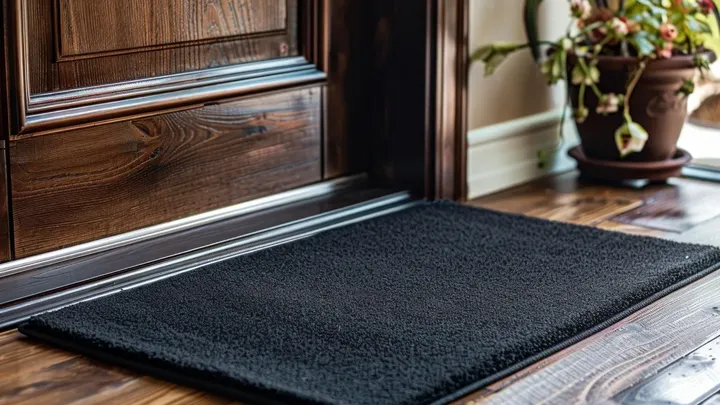
In autumn, the doormat often gets pushed right up against the front door. It keeps muddy shoes away from the hallway and catches rainwater before anyone steps inside. But this familiar habit can create a problem for wooden doors.
When a doormat stays soaked and touches the bottom of the door or frame, it can keep moisture against the wood for longer. That's particularly unfortunate because the lower edge is already one of the most vulnerable parts of a wooden door.
Painters and wood repair specialists warn that this is often where rot begins. And by the time the damage becomes obvious, repairs may be needed.
Why the bottom of your front door is especially vulnerable
Rain doesn't affect every part of a wooden door equally. Water runs down the surface, collects around the threshold and splashes upward from the paving during heavy showers.
According to Historic England, timber getting wet isn't necessarily the problem. It's moisture that remains trapped for long periods that creates conditions for decay.
According to specialists at Houtrot Reparaties, the underside of a door is frequently poorly painted or sealed. Moisture can enter through this exposed edge without homeowners noticing.
The Dutch homeowners' association Vereniging Eigen Huis offers similar advice. It warns that raindrops remain hanging beneath doors and windows. If these surfaces aren't protected with paint, the water can soak into the wood and eventually contribute to rot.
Corners and joints are particularly vulnerable because water can work its way through small gaps in the protective finish. That's why letting the area around a wooden door dry properly after heavy rain matters.
How a wet doormat can make things worse
A recent French home maintenance article highlights something homeowners rarely consider: a soaked doormat positioned tightly against a wooden door can slow down drying.
Some traditional coir mats absorb considerable moisture. After several days of rain, they may remain damp long after the shower has stopped.
If the mat touches the wooden door or frame, moisture can remain in contact with an area that needs to dry out.
That doesn't mean doormats automatically cause wood rot. Poor drainage, damaged paint and gaps around the threshold are also important factors.
Painting company Mark de Joode Schilderwerken explains that moisture can accumulate around low thresholds, particularly where water and dirt collect against poorly protected wood.
The warning signs you shouldn't ignore
Wood rot doesn't always start with an obvious hole. Early damage can remain hidden behind paint that looks perfectly normal.
Historic England recommends checking exterior doors and windows for damaged paintwork, decay, and exposed timber, especially around thresholds and lower edges. Its advice is particularly relevant to older homes with traditional wooden doors, where moisture can enter through gaps and deteriorating finishes. The organization also emphasizes that keeping exterior woodwork properly painted helps protect it from the weather.
Door manufacturer Therma-Tru recommends protecting all exposed door edges with the appropriate finish, including the bottom edge. It's an important reminder that painting the front and back of a door isn't always enough. The underside also needs protection, even though homeowners rarely see it.
Finishing company ALPI identifies several signs worth checking:
- Paint that bubbles, cracks, or peels near the bottom.
- Darkened, discolored, or unusually soft wood.
- Small cracks around the door frame or threshold.
- A door that suddenly becomes difficult to close.
A sticking door doesn't necessarily mean rot. Wood can swell temporarily during damp weather, while worn hinges can cause similar problems.
However, soft or crumbling wood deserves closer attention.
A two-minute check before winter
Start by pulling the doormat away from the door. Look at the threshold and the two bottom corners of the frame.
Check for peeling paint, damp patches, and places where water collects. Gently press any suspicious areas with your thumbnail. Sound wood should feel firm rather than soft or spongy.
If possible, use a small hand mirror to look underneath the door. Check whether the bottom edge appears properly painted or sealed.
This won't reveal every hidden problem, but it can help you spot damage that usually goes unnoticed.
Simple habits that help prevent expensive repairs
Leave a small gap between the outdoor mat and the wooden door or frame. After heavy rainfall, lift a soaked mat and let the area underneath dry.
For exposed entrances, consider a mat designed to let rainwater drain away rather than holding it against the threshold. An absorbent mat can sit inside the hallway instead.
More importantly, keep the underside of wooden doors properly protected. Ask a painter to inspect and reseal exposed edges where necessary.
If rot has already developed, specialists may remove the damaged wood and repair it with epoxy or replacement timber. Extensive damage can require larger repairs.
The important thing is to address the moisture source first. Moving the doormat is a useful habit, but keeping water away from vulnerable wood is what really matters.