
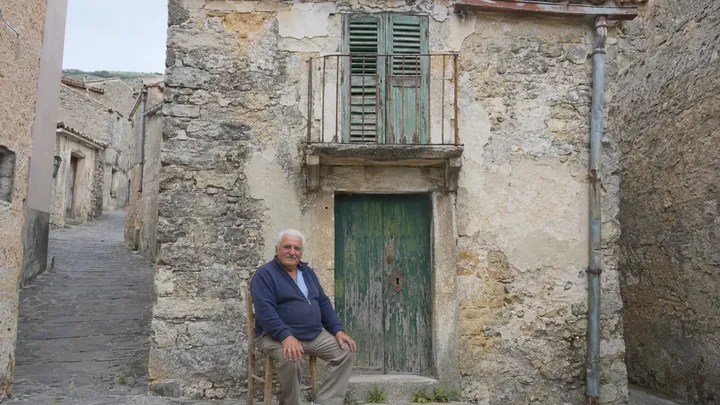
A ruin for one dollar
Halfway up a steep lane in a small hill village in Sicily stands a narrow stone house that most people walk right past. The walls are rough grey and honey-colored stone, the wooden door is a faded green, and a small rusty balcony hangs over the street. Three years ago it looked even worse. The roof over the back room had fallen in; there was no water and no power, and a wild fig tree was growing up through the kitchen floor. Nobody had lived in it for almost fifty years. The town sold it for one euro, about the same as a dollar.
The man who bought it is Ray. He is 71, and he drove a city bus in Chicago for 32 years. After his wife, Carol, died, their brick bungalow on the Southwest Side felt very quiet. One evening, his daughter, Angela, sent him an article about Italian villages that sell empty old houses for one euro to anyone who promises to fix them up. Ray read it three times. His grandmother Rosaria had left a village twenty miles from there in 1921, with one suitcase and no English.
Everyone told him he was crazy. His friends at the diner laughed out loud. Angela said she had only sent it as a joke. The rules were no joke either: he had to hand the town a renovation plan, put down a deposit of 5,000 euros that he would only get back when the work was done, and finish everything within three years. Ray spoke maybe twenty words of Italian. He signed anyway. "I drove the same streets for 32 years," he says. "I wanted to see a new one." On the next page, see what was waiting behind that old green door.