
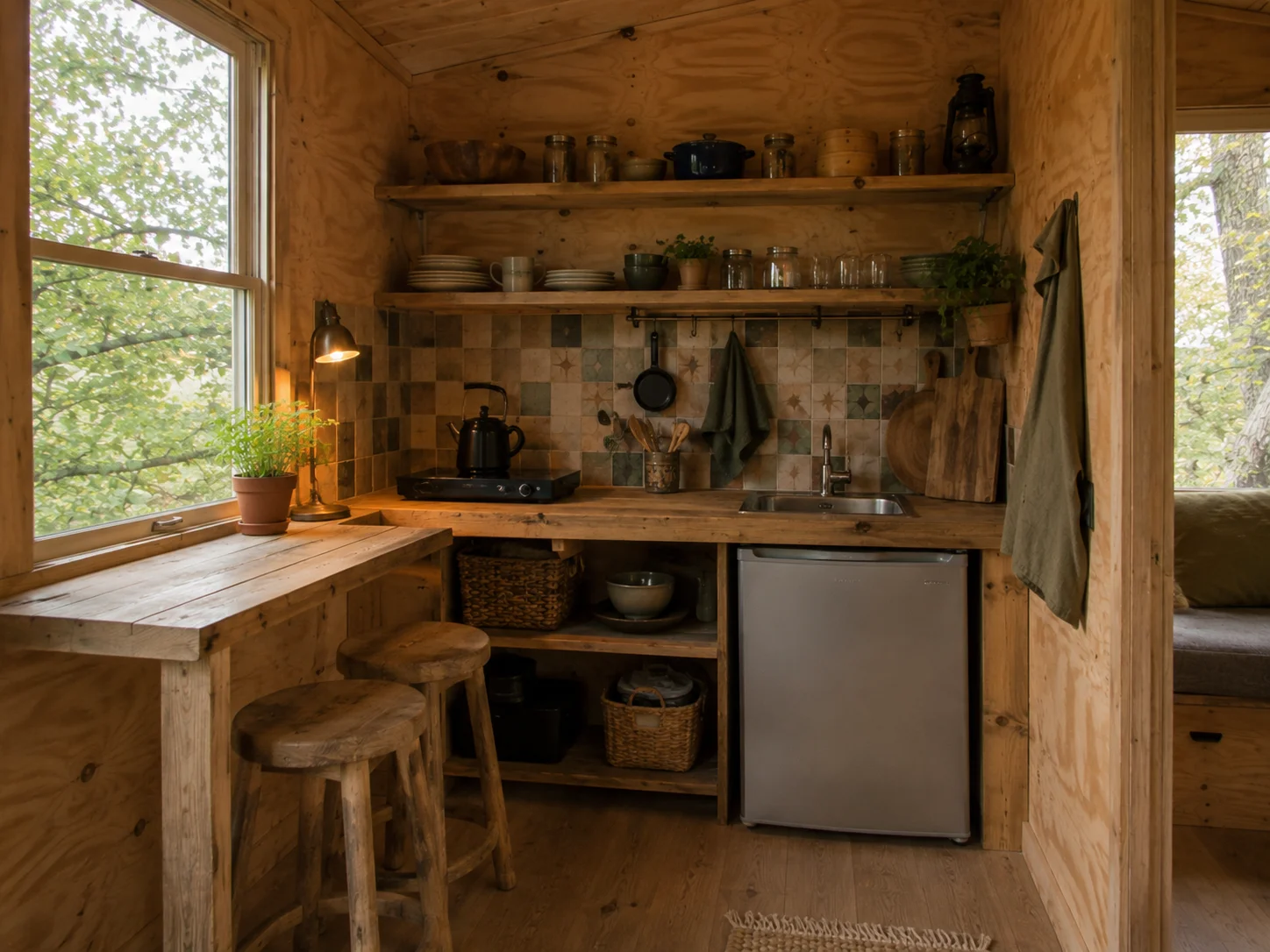
The kitchen is tucked along one wall, but it has everything Mark and Lily need for ordinary meals. There is a two-burner induction plate, a small sink, a half-height fridge, and open shelves made from leftover planks. Mark chose shelves instead of cupboards because they were cheaper, lighter, and made the room feel less boxed in. A curtain below the sink hides cleaning supplies and keeps the cheap plumbing out of sight.
Most of the materials came from places other people had stopped caring about. The countertop was once part of a school science table. The sink came from a renovation job. The tiles behind the stove were mismatched leftovers from three different bathrooms, but Mark arranged them in a simple pattern so they looked intentional instead of forgotten.
Lily’s contribution was the breakfast bar. She wanted a place where she could eat pancakes, draw, and watch her dad cook without standing in the way. Mark built it from a narrow offcut and two metal brackets. It seats only two people, but in this house, that is exactly enough, especially on cold mornings when the kettle fogs the window and the whole kitchen smells of toast and cheap coffee.