
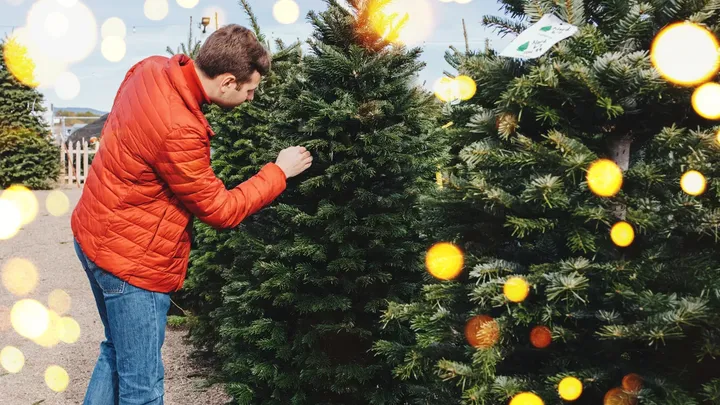
At Christmas tree lots and garden centers, a familiar ritual takes place every year: someone pulls off a needle, bends it between their thumb and finger, and wonders whether the result is a good sign. Sometimes the needle snaps, sometimes it bends. But which means the tree is fresh?
Surprisingly, even Christmas tree growers give conflicting advice. The explanation, according to forestry experts at Purdue University, lies in the type of tree you're buying.
With the first Sunday of Advent falling on November 29 and many families heading out to buy their Christmas trees this weekend, here are the freshness checks worth knowing before bringing one home.
Why the Christmas tree needle test can be confusing
The Delaware Christmas Tree Growers Association recommends bending a needle between your fingers. If it doesn't break and returns to its original position, the association considers that a sign of freshness. Christmas tree growers in Oklahoma offer similar advice.
However, the Puget Sound Christmas Tree Association in Washington recommends almost exactly the opposite. It compares a fresh needle to a fresh carrot: it should snap crisply when bent. A limp needle could indicate that the tree has already lost considerable moisture.
The association makes an important exception for pine trees. Their needles have a different, more fibrous structure, allowing them to bend when fresh.
Purdue University summarizes the distinction simply: fresh fir needles snap, while fresh pine needles bend.
That means a needle from a Fraser fir or Nordmann fir may snap even when the tree is perfectly fresh. A fresh Scotch pine needle, on the other hand, should bend.
Norway spruces belong to a different botanical group and naturally have stiffer, sharper needles. For these trees, it's better to rely on several freshness checks rather than the bending test alone.
Run your hand along a branch
One of the easiest ways to check freshness is to gently run your hand along an outer branch, moving from the trunk toward the tip.
Very few needles should come loose. If your hand is suddenly full of green needles, consider choosing another tree.
According to Iowa State University Extension, the outer branches of a fresh Christmas tree should also be flexible rather than breaking easily when gently bent.
Another useful trick is to lift the tree slightly and gently bump the bottom of its trunk against the ground. A few brown needles falling from the interior are perfectly normal. A shower of green needles from the outer branches, however, is a warning sign.
Look at the bottom of the trunk
The underside of the tree can reveal something about its freshness.
Dutch gardening magazine Gardeners' World recommends looking for a light-colored cut surface. A moist, slightly sticky trunk end can also be an encouraging sign.
If you're buying a tree with roots, check the soil around them. A heavier, moist root ball may indicate that the tree has been kept better hydrated than one with completely dry soil.
Which type of Christmas tree lasts longer?
The Nordmann fir, particularly popular in the Netherlands and the UK, is known for its soft, dark green needles and excellent needle retention.
According to the Royal Horticultural Society, the Norway spruce offers that familiar Christmas tree fragrance and is generally less expensive, but tends to shed its needles sooner.
For American shoppers, Fraser firs and Scotch pines are also good options for keeping needle loss to a minimum.
If you intend to replant your tree after Christmas, look for one that has been grown in a container rather than assuming any tree sold with a root ball will survive.
Getting your Christmas tree home
Have your tree wrapped in protective netting after checking its freshness, and avoid leaving it somewhere warm or exposed to drying winds.
Before placing it in its stand, saw approximately half an inch (1.3 centimeters) off the bottom of the trunk and immediately place it in water.
Keep your tree away from radiators, heating vents, and direct sunlight, and check its water level daily.
A few extra minutes spent inspecting your tree before buying it could mean considerably less vacuuming in the weeks leading up to Christmas.