
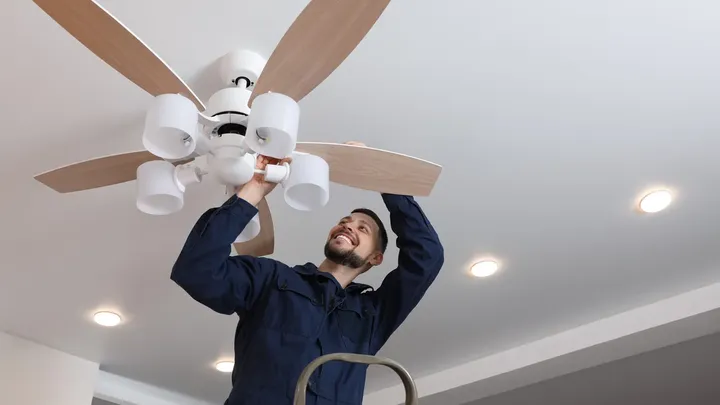
When the temperature drops, most people stop using their ceiling fan until summer returns. After all, the last thing you want on a cold evening is a breeze blowing around the room while the heating is on.
But you don't necessarily have to leave your fan switched off all winter. There's a simple setting that could help make your room feel more comfortable, and it takes just a moment to check whether your fan has it.
Change the direction of your ceiling fan
Many ceiling fans can spin in two directions. In summer, they usually turn counterclockwise to create a breeze that helps cool you down. In winter, the recommended setting is the opposite: clockwise at the lowest speed.
The US government's ENERGY STAR programme recommends this setting for the colder months.
Why does it help? Warm air rises, so some of the heat from your heating system can gather near the ceiling. A fan turning slowly in the opposite direction helps circulate that air back around the room without creating a strong breeze directly beneath it.
The idea is to make better use of the heat that's already there, rather than generate more warmth.
How to switch your fan to winter mode
The direction switch is usually easy to find. Here's what to do:
- Switch the fan off. Wait until the blades have stopped completely before changing the direction.
- Find the reverse switch. It's often a small slider on the motor housing, just below the blades. Some newer fans have a reverse button on the remote or in an app.
- Choose the winter setting. Select clockwise rotation, or look for a setting labelled "winter" if your fan uses those labels.
- Set it to low speed. You want gentle air circulation, not a breeze blowing down on you.
To check the direction, stand underneath the fan and look up. The blades should turn clockwise from your viewpoint. You should feel little or no direct breeze.
If you're unsure which setting to use, check the manual for your particular model. Not every ceiling fan has a reverse function.
Will it save you money on heating?
That depends on your room and how you use the fan. The effect may be more noticeable in rooms with high or vaulted ceilings, where warm air can collect well above your head. In rooms with low ceilings, the difference may be smaller.
Don't expect the fan alone to make a dramatic difference to your heating bill. The main benefit is improved air circulation, which may help the room feel more comfortable. If it does, you might find you can turn the thermostat down slightly.
Remember to switch the fan off when you leave the room, as ENERGY STAR recommends.
Before switching it on for the first time in months, wipe the blades to remove any dust that's collected over summer.
It only takes a minute to check your fan's settings. If your model supports reverse rotation, this small adjustment could help you get more use out of it throughout the colder months.