
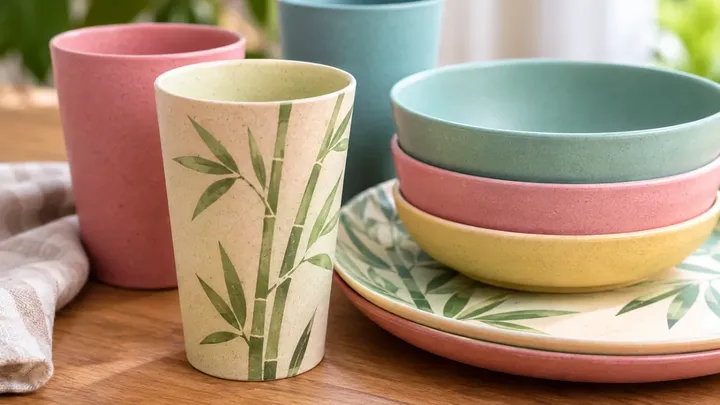
A few years ago, colourful bamboo cups, children's plates and reusable coffee mugs seemed to be everywhere. They were lightweight, easy to clean and looked like a more natural alternative to ordinary plastic. Many people bought them for picnics, camping trips or everyday use, and some are probably still sitting in kitchen cupboards.
But these familiar items have since attracted attention from food safety authorities in Europe and Britain. The advice is worth knowing, particularly if you bought a set for children or still bring it out for family gatherings.
What's actually in these bamboo cups?
Here's where things get a little confusing. Many products sold as bamboo tableware aren't made from solid bamboo. They're actually made from melamine plastic mixed with bamboo or maize fibres.
Melamine is a hard, durable plastic commonly used for lightweight plates, bowls and cups. The plant fibres were added to give the products a more natural image, but this combination was never authorised for use in plastic food-contact materials under EU rules.
The Dutch Nutrition Centre (Voedingscentrum) explains that the bamboo fibres are mixed throughout the plastic. That means a product can look like ordinary melamine tableware, even if it's being sold as bamboo.
Why are food agencies concerned?
The concern is that unwanted substances can pass from the material into food and drinks.
When the Dutch Food and Consumer Product Safety Authority (NVWA) tested this type of tableware, some products released more formaldehyde than the permitted limit. Formaldehyde is a chemical used in the production of certain plastics. In sufficient quantities, it can irritate the stomach.
The Voedingscentrum says the concern is particularly relevant for babies and young children. However, there's no need to panic if your family has used these cups or plates in the past. The centre says there are no indications of long-term health consequences from previous use. Its advice is to stop using products made from melamine mixed with bamboo or maize for food and drinks.
Are they still allowed to be sold?
No. Under EU Regulation 10/2011, plastic materials intended to come into contact with food can only contain authorised substances. Bamboo and maize fibres are not on that list for this use.
The British Food Standards Agency (FSA) and Food Standards Scotland have also advised that plastic food containers and utensils containing bamboo or similar unauthorised plant materials should not be sold or used. They highlight the possibility of formaldehyde and melamine migrating into food, particularly when it is hot or acidic.
Which products are still safe to use?
The important thing is that not all bamboo or melamine tableware is affected.
- Solid bamboo: Wooden spoons, chopping boards and genuinely solid bamboo products are not covered by the warning. They have a visible natural wood grain.
- Pure melamine: Tableware made from melamine without added bamboo or maize can still be used by adults, following the manufacturer's instructions. It should never go in the microwave.
- Melamine mixed with bamboo or maize: This is the combination food agencies advise against using for food or drinks.
For children under three, the Voedingscentrum recommends using pure melamine only for cold or lukewarm food and drinks.
How to check your cupboard
Take a look at the bottom of any cups, plates or bowls you bought as bamboo tableware. Check the packaging or product markings for terms such as 'bamboo fibre', 'plant fibre', 'natural fibre' or 'melamine'.
If you're unsure whether an item contains a plastic-and-plant-fibre mixture, don't use it for food until you've checked what it's made from.
You don't necessarily have to throw it away immediately. The FSA says these products can be repurposed for non-food uses, such as holding pens or gardening supplies. In the Netherlands, the Voedingscentrum advises putting them in residual waste because they cannot be recycled. In Britain, the FSA recommends general waste. If you're in Belgium, check your local waste authority's guidance.
It only takes a minute to check an old picnic set, but it could help you avoid using the wrong kind of tableware.