
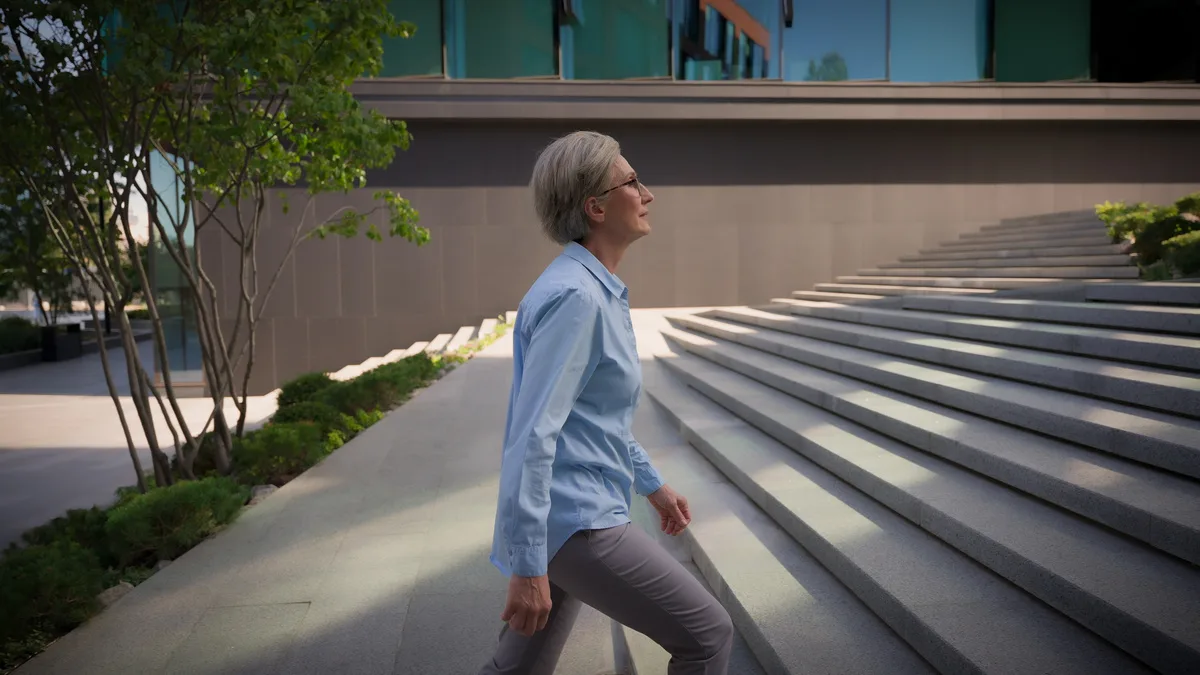
I used to take the elevator at work without thinking twice, until I had no choice but to take the stairs one day. At first, I wasn't thrilled, but I soon noticed something unexpected: by the time I reached my desk, I actually felt more energized. It made me rethink what counts as exercise. What if I don't always need a gym session or a long walk to get moving?
You might be walking more, counting your daily steps, or thinking about joining a gym. But one way to add exercise to your day could be right in front of you: the stairs.
It's an activity you can fit into your normal routine without buying equipment or setting aside an hour for exercise.
What the study of 480,000 people found
An August 2026 study involving 480,479 people found that regular stair climbers had a 39% lower risk of dying from cardiovascular causes and a 24% lower risk of dying from any cause. Earlier research suggests that climbing just over five flights, approximately 50 steps, a day is associated with better heart health.
In the present research, the review and meta-analysis examined nine studies involving 480,479 adults aged 35 to 84. Participants included healthy adults and people with existing cardiovascular conditions.
The researchers found that people who regularly climbed stairs were less likely to die from cardiovascular disease or any cause. The mortality figures came from a pooled analysis of five of the studies, involving 455,619 participants. Stair climbers also had lower rates of heart attacks, strokes and heart failure.
Professor Vassilios Vassiliou, a co-author from the University of East Anglia, described taking the stairs as a practical way to fit more physical activity into everyday life.
But how many stairs should you actually climb?
How many stairs a day make a difference?
The 2026 analysis doesn't establish an ideal daily target. However, a 2023 study provides a useful starting point. Researchers examined data from 458,860 UK adults over a median follow-up period of 12.5 years. They found that climbing more than five flights of stairs, roughly 50 steps, each day was associated with more than a 20% lower risk of atherosclerotic cardiovascular disease, compared with not climbing stairs.
Interestingly, participants who stopped climbing stairs between assessments had a higher cardiovascular risk than those who reported never climbing them. This doesn't prove that stopping caused the increase, but it reinforces the importance of long-term habits.
However, remember that five flights is a useful benchmark, but not a guaranteed threshold.
Why climbing stairs is such good exercise
Unlike walking on flat ground, climbing stairs means repeatedly lifting your body weight against gravity. Your heart beats faster, your breathing increases, and your leg muscles work harder.
It's also a weight-bearing activity that can help maintain bone strength as you age.
A review of 24 studies found that regular stair-climbing programs could improve cardiovascular and metabolic health indicators, including blood pressure, cholesterol, and insulin sensitivity. Some improvements became measurable after four to eight weeks.
How to add more stairs to your day
You don't have to begin with five flights. If you can comfortably manage stairs, start by taking one flight instead of the elevator. Add another as the activity becomes easier.
Use the stairs at home, work, or when visiting a public building. Wear supportive shoes, use the handrail when necessary, and avoid rushing. You can spread them throughout your day rather than climbing them all at once.
Consistency matters more than forcing yourself to reach a target number immediately.
Some important things to remember
All the studies above were largely observational and relied on participants reporting their own activity. While they establish reliable associations, they are not proof that stair climbing itself prevents cardiovascular deaths. People who regularly use stairs may also be generally more active than those who don't.
Stairs aren't suitable for everyone, particularly people with significant joint problems, balance difficulties or mobility limitations. If you have a heart condition or have been inactive, speak with your healthcare professional about appropriate exercise. And always stop if you develop chest pain, dizziness, or unusual breathlessness.
Stair climbing also doesn't replace other exercise. The CDC recommends a combination of aerobic, strength, and balance activities for older adults. But when it's safe for you, taking the stairs can be one more way to add movement to a busy day.