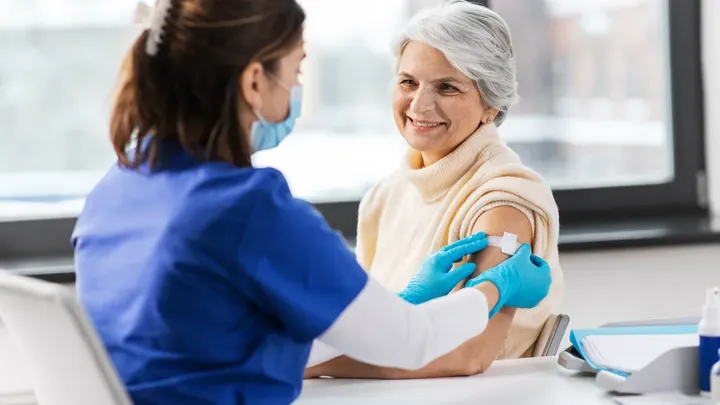
If you had chickenpox as a child, the virus is still hiding in your body. As you get older, it can become active again, causing shingles – a painful rash that sometimes leaves people with nerve pain lasting months or even years.
A vaccine offers strong protection, but whether you qualify for free vaccination depends on your age, medical history, and where you live.
Meanwhile, a study from Wales has given researchers another reason to investigate the vaccine. People who received an older shingles vaccine were 20 percent less likely to receive a dementia diagnosis over seven years.
Who can get the shingles vaccine for free?
In the United States, the Centers for Disease Control and Prevention (CDC) recommends two doses of Shingrix for everyone aged 50 and older, with no upper age limit. Certain adults with weakened immune systems also qualify from age 19.
People with Medicare Part D pay nothing out of pocket for the vaccine, and most private health insurance plans cover it. Without insurance, however, the two doses can cost around $460 or more.
In England, the NHS offers free vaccination to people who turn 65 on or after September 1, 2023, adults aged 70 to 79, and adults aged 18 and older with severely weakened immune systems. Eligibility is gradually being expanded.
New vaccination rules in the Netherlands and Belgium
The Netherlands plans to introduce free shingles vaccinations for 60-year-olds during 2027. According to the RIVM, the exact starting date has yet to be announced.
The Dutch government has also reserved additional funding for a proposed vaccination campaign targeting people aged 61 to 69 between 2028 and 2031. However, the expansion is not yet guaranteed.
For now, most older adults must pay themselves unless they belong to an eligible medical risk group. The GGD Noord- en Oost-Gelderland charges €496.90 for both vaccinations, including consultation fees, in 2026.
In Belgium, vaccination is recommended from age 60, but reimbursement is largely restricted to certain medical risk groups. Shingrix costs €163.34 per dose, bringing the total vaccine cost to €326.68 before any additional consultation fees.
How well does the shingles vaccine work?
According to the RIVM, Shingrix prevents around nine out of ten cases of shingles in adults aged 50 and older. It also prevents approximately 90 percent of cases of persistent nerve pain following shingles.
Protection remains strong for years. The two doses are typically administered two to six months apart, although schedules vary between countries and medical circumstances.
Common side effects include a sore arm, muscle aches, tiredness, headaches, and fever. These generally disappear within a few days.
The vaccine cannot, however, treat nerve pain that has already developed following a shingles infection.
What researchers discovered about shingles and dementia
A study published in Nature in April 2025 examined an unusual vaccination rule introduced in Wales in 2013.
People who were just under 80 when the vaccination program began qualified for the vaccine, while those who had just celebrated their 80th birthday did not.
This gave Stanford University researchers an opportunity to compare people who were almost identical in age but had different access to vaccination.
Over seven years, receiving the vaccine was associated with a 20 percent relative reduction in new dementia diagnoses, equivalent to a difference of 3.5 percentage points. The researchers observed a stronger effect among women.
Importantly, the study examined Zostavax, an older vaccine, rather than Shingrix, which is widely used today.
Should you get vaccinated to reduce your dementia risk?
The findings are promising, but they don't establish that today's shingles vaccine offers the same potential benefit against dementia.
The RIVM explicitly states that existing research is insufficient to recommend shingles vaccination specifically for dementia prevention.
For now, the strongest reason to get vaccinated remains its proven protection against shingles and the potentially debilitating nerve pain that can follow.
If you're considering vaccination, speak to your doctor about your individual risk, eligibility, and insurance coverage. You may already qualify for free vaccination without realizing it.
Medical disclaimer: This article is intended for informational purposes only and is not a substitute for professional medical advice, diagnosis, or treatment. Although research suggests a possible link between shingles vaccination and a reduced risk of dementia, the vaccine is not currently recommended specifically for dementia prevention. Vaccination eligibility, costs, and insurance coverage may vary by country and individual circumstances. Always consult your doctor or healthcare provider before making vaccination-related decisions.