
You finish taking a shower, dry your hair and suddenly notice that one ear sounds muffled. Everything seems a little quieter on that side, and there's an uncomfortable feeling of fullness that wasn't there before. One possible explanation is a build-up of earwax.
It's a common problem, particularly as we get older. And while reaching for a cotton bud might seem like the quickest way to clear things out, it can actually make the blockage worse. Healthcare professionals recommend a gentler approach that gives the earwax time to soften and move naturally.
Why does earwax build up?
Earwax isn't dirt that needs to be scrubbed away. It's a natural substance that protects the ear canal by trapping dust and other particles. Normally, it moves gradually towards the opening of the ear, where it falls out on its own. The movement of your jaw when you talk and chew helps this natural cleaning process.
However, this process doesn't always work as smoothly as it should. As we get older, earwax tends to become drier and harder, making it more difficult to move out of the ear naturally. Some people also naturally produce more wax or have narrow or particularly hairy ear canals.
Hearing aids, earplugs and in-ear headphones can also contribute to the problem by interfering with the natural movement of wax.
A build-up can cause muffled hearing, earache, a blocked sensation or ringing in the ears.
Why cotton buds can make things worse
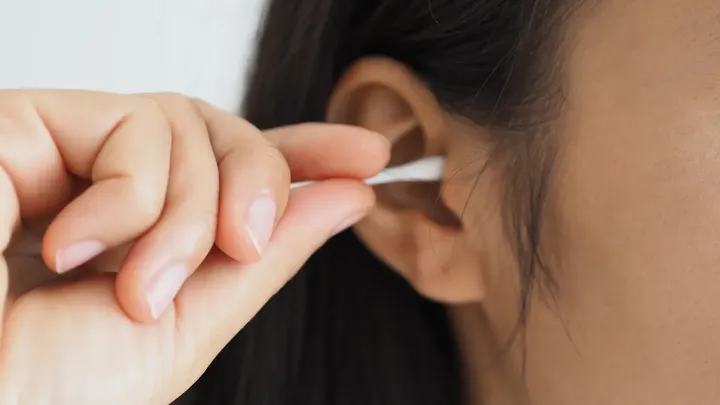
The problem with cotton buds is that they often push earwax further into the ear instead of removing it. Repeatedly doing this can pack the wax tightly enough to create a blockage.
The NHS advises against putting cotton buds, fingers or other objects inside the ear. They can also irritate or damage the delicate skin inside the ear canal.
That doesn't mean you need to clean your ears with special tools. The outer ear can simply be wiped with a soft washcloth or tissue. The inside is usually able to take care of itself.
The simple routine recommended by the NHS
For people with an earwax blockage, the NHS recommends using olive or almond oil drops to soften the wax.
The routine is straightforward:
- Lie on your side with the affected ear facing upwards.
- Put two to three drops of olive oil into the ear. Avoid almond oil if you have an almond allergy.
- Stay in that position for five to ten minutes.
- Repeat three to four times a day for three to five days.
The oil helps soften the wax so it can move out of the ear more easily. It may take around two weeks for the wax to come away completely, and you might not notice it happening.
Dutch GP practices recommend a similar approach before ear syringing. For example, Huisartsen De Allee advises using a few drops of salad oil, olive oil or water twice a day for three days before treatment.
When should you contact your doctor?
Oil drops aren't suitable for everyone. Don't use them if you have a perforated eardrum, and seek medical advice first if you've had ear surgery, have ear tubes or suspect an infection.
If your ear remains blocked after trying treatment, or you experience pain, discharge or bleeding, contact your GP. Sudden hearing loss, especially in one ear, needs urgent medical assessment rather than being treated as an ordinary earwax blockage.
If you regularly struggle with blocked ears, it's worth discussing it with your doctor. And the next time you reach for a cotton bud, remember: your ears generally don't need you to clean inside them.